







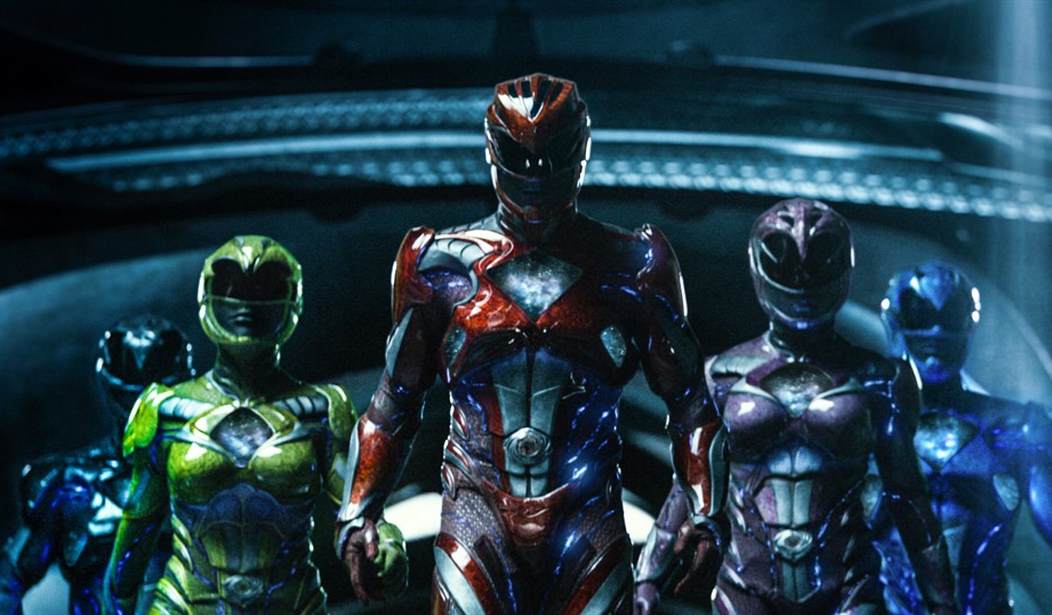

Not just the Power Rangers, but I'm going to use them as my primary example.
As many of you know, I'm a father to a little three-year-old boy, and as his father, I get to introduce him to media that I think is good for him. Of course, so does my wife, and if you were to spend a few days in our household, you'd notice a complete and total difference in what we think he should watch during his screen time.
My wife puts on "boy" shows and thus allows him to have his screen time with things boys would like. "Spidey and His Amazing Friends" is a popular choice for her, as is "Paw Patrol" and "PJ Masks." If it involves kids being superheroes, then you can bet she's offering him those options during screentime.
Now, to be clear, I don't have an issue with him watching these shows. They're fun and innocent, but I am noticing a constant pattern with each of these programs.
They all revolve around a team of friends working together to stop the machinations of some bad guy who is, at best, a nuisance more than an actual threat. At three years old, this is fine, but when I was a kid, I can remember some of my first memories involving a lot more danger and the bad guys actually being bad guys.
Perhaps I've been in the game of being a culture critic for too long that I've noticed this pattern, but no matter where I go, it seems many of the kids' shows made from the past five years all have the same theme of "teamwork" and "finding strength in each other's differences." It's the kind of messaging that makes a RedState writer's eyes narrow in suspicion over time.
Again, I don't hate that message now and again. Finding strength in your friends and putting to use the skills and talents of others to help you fill in the talent gaps you lack is a great thing. Many a successful business is built on that very concept... but when it's the only message I keep seeing repeatedly, I can't help but think this is conditioning.
Moreover, I notice that in a lot of these kids' shows, nothing ever really happens to the bad guy. I can only watch the Green Goblin and Mayor Humdinger commit heinous felonies like kidnapping and what would amount to attempted murder with no consequences so many times before I start wondering if the message being sent to my child is actually a bad one.
I can remember when I was a young boy, the television shows we were given were Gen X hand-me-downs like "Thundercats" and "Voltron," and of course, we had Millennial kids' shows like "Power Rangers" and "Ninja Turtles." It might be my bias for these shows surfacing because I grew up with them, but I can't help but wonder if these weren't better for kids than shows that feature little to no violence and sometimes even emphasise "conflict resolution" instead of punishing evil.
"Power Rangers" was pretty great because it did actually feature the good guys using weapons to fight the bad guys. These bad guys were often monsters, but when they were human, such as in the Green Ranger arc, they didn't hold back. Violence is a feature of "Power Rangers," and it doesn't shy away from the fact that if you want to win against evil, then the good guys are gonna have to swing some blades and pull some triggers.
"Ninja Turtles" had the same flair. They were ninjas with weapons, and they used those weapons in their fight against evil. Stuff was getting punched, kicked, sliced, and diced.
I want my son to know that evil isn't always stopped through a good attitude, an adherence to fair play, and respecting everyone around you. Sometimes, you've gotta draw your weapon and put it down. Evil isn't going to have its plan stopped, then just walk away and pout for a while. It's going to up the stakes and become increasingly nasty until you put it down.
A lot of our old fairy tales were like this. Even old Disney movies embraced that fact and oftentimes saw the villain destroyed in one way or another. These tales were there to impart an understanding about evil that I don't think our children should be robbed of.
G.K. Chesterton once wrote in "The Red Angel":
Fairy tales, then, are not responsible for producing in children fear, or any of the shapes of fear; fairy tales do not give the child the idea of the evil or the ugly; that is in the child already, because it is in the world already. A child has known the dragon intimately ever since he had an imagination. What the fairy tale provides for him is a St. George to kill the dragon.
C.S. Lewis was pretty adamant about not sanitizing children's entertainment either, and he minced no words about it:
Since it is so likely that they will meet cruel enemies, let them at least have heard of brave knights and heroic courage. Otherwise, you are making their destiny not brighter but darker. Nor do most of us find that violence and bloodshed, in a story, produce any haunting dread in the minds of children. As far as that goes, I side impenitently with the human race against the modern reformer. Let there be wicked kings and beheadings, battles and dungeons, giants and dragons, and let villains be soundly killed at the end of the book.
I agree. I don't think we spare children anything negative by not allowing them a little violence in their stories, and might even be setting them up for being victims of dangers they aren't ready for down the line.
Bring back the violence. Responsibly, of course, but bring it back nonetheless.


