
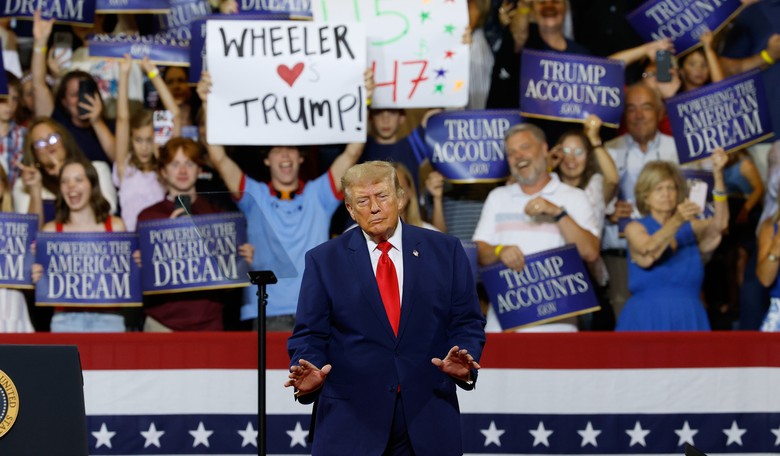
President Donald Trump will hold campaign rallies in Kansas and Iowa on Sunday after briefly canceling the planned stops earlier in the week. The Republican National Committee had announced a shift to tele-rally events across nearly 20 states, citing strong positions in those two places and a desire to reach more voters in the final stretch before the midterms.
Trump reversed course on Friday, restoring the in-person appearances alongside the expanded phone schedule. The change puts him back in Salina, Kansas, and Iowa for events supporting competitive Senate races.
This decision carries weight beyond the immediate calendar adjustment. Kansas and Iowa sit at the center of American agriculture, energy production, and manufacturing. Their voters often decide close contests that shape control of the Senate. By returning to these states, Trump signals that the Midwest remains essential terrain rather than an afterthought.
Coastal media markets and big city population centers draw constant attention, yet the practical work of feeding the nation, refining fuel, and sustaining supply chains happens in places like these. Ignoring them carries real political costs.
🚨 JUST IN: President Trump's IN-PERSON RALLIES are BACK ON for Sunday in back-to-back Kansas and Iowa events, per multiple reports LFG! The dude is holding nothing back! 🔥 This is in addition to multiple tele-rallies happening this weekend, and a Florida rally today https://t.co/CqNqMoRQ8k
— Eric Daugherty (@EricLDaugh) October 30, 2026
The contrast with the final years of the previous administration stands out clearly. Joe Biden’s midterm efforts in 2022 were limited and often strained. Health setbacks, including a COVID diagnosis that forced isolation and canceled travel, combined with visible fatigue on the trail.
Rallies and appearances frequently raised questions about stamina and focus rather than projecting steady leadership. Those moments left an impression of decline at a time when Democrats needed energy to protect their majorities.
Q: Is there anything you can say to explain all the schedule changes? Trump: So, I wanted to do telerallies. I'm unbelievable at telerallies. I do them well, and it's a great instrument. But I got calls from people in Iowa and Kansas, saying if you could go, it would be better than a telerally. And then we will do a lot of telerallies on Monday. These are telephonic rallies.
— FactPost (@factpostnews) October 30, 2026
Trump’s choice to appear in person in Kansas and Iowa presents a different picture. He continues a demanding travel schedule even as early voting numbers climb nationwide, and races tighten.
Critics will note the initial cancellation and the subsequent reinstatement as evidence of uncertainty. Trump addressed the health speculation directly, stating he felt fine and initially believed local candidates were performing strongly enough without an in-person visit.
Local supporters and candidates then requested the events, according to reports. The adjustment reflects responsiveness rather than retreat. In close Senate contests, personal appearances can still drive turnout in ways phone events cannot fully match. Rural and small city voters respond to candidates who show up in their communities.
President Trump has reversed his decision and will now hold an in-person rally in #Salina, #Kansas on Sunday, November 1st. The event has been rescheduled to 2:00 PM at the Salina Regional Airport's Hangar 509.
— Randy McCool (@realRandyMcCool) October 30, 2026
The broader point involves how national parties allocate attention. Elections are won by assembling coalitions that include farm states, manufacturing towns, and energy-producing regions. Policies on trade, regulation, energy production, and agricultural support matter deeply to these voters.
Treating the heartland as secondary risks alienating the people who keep the country’s basic systems running. Trump’s schedule change, whatever the internal discussions that produced it, keeps those communities in the conversation during the campaign’s closing days.
Competitive races in Kansas and Iowa illustrate the stakes. Incumbent and challenger contests there will help determine the Senate balance. Early voting data already show higher participation than at the same point in the previous midterm cycle. Candidates who connect with local concerns on inflation, border security, and economic opportunity stand to benefit. An active presidential schedule in these states reinforces the message that their priorities rank high.
Political campaigns involve constant recalculation. Schedules shift for weather, polling, or strategy. What matters is the final emphasis. By restoring the Kansas and Iowa stops, Trump affirms that the center of the country still counts. That recognition serves as a practical reminder for both parties. National success depends on more than the coasts. It requires attention to the places where much of the nation’s work actually gets done.