






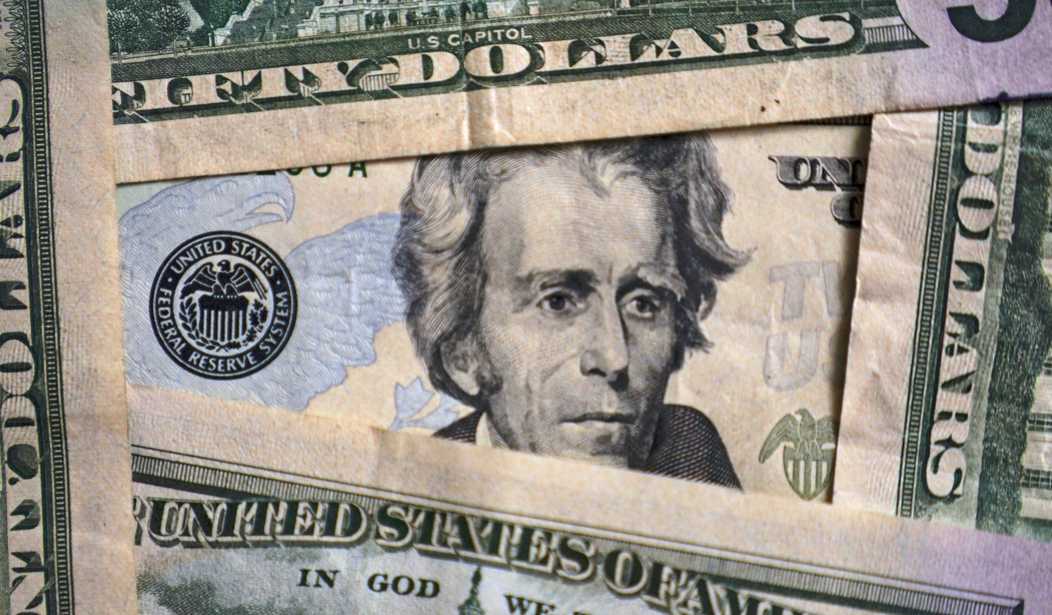
As RedState has already reported, the Iran war has led to another boost in inflation:
Consumer prices rose 4.2 percent from a year earlier in May, the highest annual reading since April 2023, according to the Bureau of Labor Statistics. The Consumer Price Index increased 0.5 percent during the month, matching what economists had forecast. One number explains most of it: Energy accounted for more than 60 percent of the overall increase.
To put this number in context, it’s important to note that “(p)olicymakers at the Fed generally believe that an inflation rate of 2 percent (or slightly below) is acceptable for a stable economy that is healthy for both consumers and businesses” although “most central banks and governments closely monitor the annual inflation rate to ensure it is at a balanced and modest level, around 2 percent to 3 percent.”
So, an inflation rate above 3 percent should be somewhat dangerous to the public, and, as a result, to politicians.
Of course, the MSM – and certain “traitorous” Republicans – have rushed to use this increase, coupled with a supposedly “insensitive” statement by President Trump, to portray him in the worst light possible. As always, context is key, and believe it or not, Politico, of all media organs, helpfully explained the key context, as the president said:
“I love the inflation,” he said. “You know why? Because as soon as this war is over, … it’s going to come down like a rock.”
The Real Key Political Question, however, is whether this increase in inflation, which impacts “affordability,” will politically harm the GOP in the House elections of 2026? Since I previously took a stab at answering this question before, let me revise and extend my reporting.
Here is a list of the yearly inflation rates from 1929 through 2024. Here are the monthly changes of inflation from 1914 through 2026. Here, thanks to Wikipedia (which can be trusted in this case), are the changes in the House over the years.
I am going to focus only on modern times, where modern campaign technology and tactics were used, which I will date from 1968 onwards.
As we can see from these charts, inflation rates from 3 to 4 percent are not particularly dangerous to the party that holds the presidency. Further, since 1968, we know that the inflation rate was 4.2 percent or higher:
- 1968 through 1970 = in 1968, the Democrats had the presidency and lost 5 seats; in 1970, the Republicans had the presidency and lost 12 seats.
- 1973 through 1981 (the final rate during 1982 dwindled down to 3.8 percent) = in 1974 the GOP had the presidency and lost 48 seats; in 1976 the GOP had the presidency and dropped another seat; in 1978, the Democrats had the presidency and lost 15 seats; in 1982, the GOP had the presidency, and despite the inflation rate steadily dipping from 8.9 percent to 3.8 percent, still lost 26 seats;
- 1987 through 1990 = the GOP had the presidency, and yet barely lost House seats, 2 in 1988 and 7 in 1990;
- 2021 through 2022 = the Democrats had the presidency and lost 9 seats in 2022.
As I said before, this chart shows that inflation itself doesn’t have a consistently major effect on House elections. It also demonstrates that the really big House losses only came during times when the inflation rate was much higher than 4.2 percent. In 1974, the Democrats won yuge because of inflation at 12.30 percent, but also because of the bad economy in general, the Watergate Scandal, and the tensions regarding the Vietnam War.
In 1982, with a rate that went down during the year from 1981’s 8.9 percent to 1982’s final 3.8 percent, the Democrats also won big, although their redistricting edge also helped them immeasurably, and there were a host of other economic problems besetting the GOP president, including high unemployment. The Democrats were also coming off an awful 1980 House ‘bust’ cycle that allowed for a ‘boom’ in 1982. But in 1978, with inflation at 9 percent, and in 2022, with inflation at 6.5 percent, the Democrats only lost a relatively small number of seats, which may have been a result of an effective campaign run by the Democrats in those years to blunt the GOP attacks on inflation.
So, I am not seeing this recent rise of inflation being of much assistance to the Democrat campaigns this year (aside from being a readily available talking point). Especially since the rest of the economic indicators seem to be pretty good. Not that the Democrats need much help – they just need a net three seats to win control over the House of Representatives.
Despite the Democrat's loss in the gerrymandering battles of 2026, this is not an insurmountable hurdle.
Editor's Note: Do you enjoy RedState's conservative reporting that takes on the radical left and woke media? Support our work so that we can continue to bring you the truth.
Join RedState VIP and use promo code FIGHT to receive 60% off your membership.



Join the Conversation
VIP members get the ability to comment on articles.