








Part 1
Axios, the poor man’s Politico, is running with an article claiming:
President Trump has a new parlor game he's springing on advisers and confidants: JD Vance or Marco Rubio?
- That is, do people favor the vice president or secretary of state to sit atop the GOP ticket to succeed him in 2028? Trump asks casually, but increasingly, several sources tell us.
Now, I have no idea of the truth of this reporting, and considering the source, no one who reads it should assume that it is true. However, it is a good bridge to discuss the 2028 GOP presidential race.
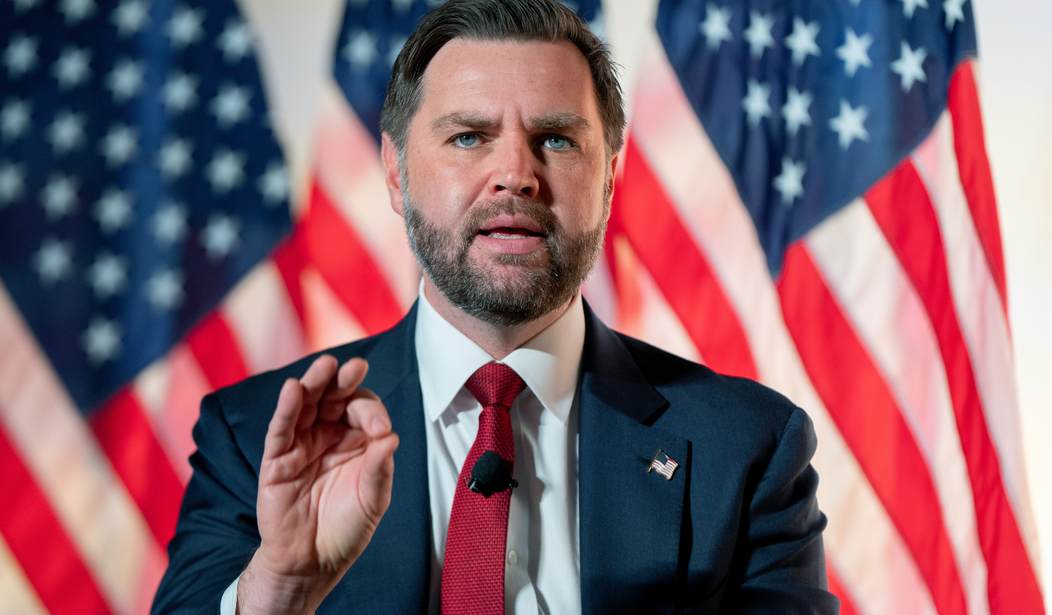
Everyone does know, of course, that Vice President JD Vance, in all likelihood, is running for president. As vice president, he undoubtedly has a leg up on any potential challengers. The vice presidency is the only other national office, and although it has been derided as “not worth a bucket of warm spit” by one of its occupants, by simply occupying it, the incumbent becomes far better known throughout the country and is often considered the "heir apparent" for the administration. The VP can also travel the nation, publicizing himself and gathering political chits from local politicians.
In the national polls, JD Vance has a substantial lead over other mentioned Republicans. In one from I&I/TIPP, he is at 43 percent in the field, with Donald Trump Jr. following in second, but he has already said he isn’t going to run. Secretary of State Marco Rubio is at 5 percent.
In a Granite State poll of the New Hampshire presidential primary, the first primary, Vance currently sits at 51 percent of the vote. Nikki Haley, the former UN Ambassador and South Carolina governor, comes in second at 9 percent, and Marco Rubio is third at, once again, 5 percent. No other possibility rises above 4 percent.
The last time there was a GOP presidential primary with a sitting vice president was in 1988, when George H. W. Bush, a two-term vice president, sought to follow his two-term president, Ronald Reagan, into the White House.
A Gallup national poll on January 13, 1986 – which was roughly the same time in the campaign process as today – had Vice President Bush at 46 percent, with then-Senate Republican Leader Bob Dole coming in second with 10 percent, and then-Congressman Jack Kemp following in third with 5 percent.
So, basically the same situation (in 1986) that we have now (in 2026).
Here are some of the usually mentioned, more credible, potential challengers to Vance:
- Marco Rubio, the Secretary of State and former two-term U.S. Senator from Florida, is the most mentioned Republican primary candidate other than Vance. He ran for the presidency in 2016, so we know that he has been interested in the past. However, Rubio has already said that "If JD Vance runs for president, he's going to be our nominee, and I'll be one of the first people to support him.” At this point, he seems more likely to join the Vance ticket as the vice-presidential nominee than run for the presidency itself.
- Ted Cruz, the three-term U.S. Senator from Texas, is widely rumored to be considering a challenge to Vance. Cruz also ran in 2016, where he was the runner-up to Trump, and he has been quoted as saying that he “loved running for president in 2016… I fully hope and expect to run again at some point.” Cruz's main problem in 2016 was the so-called ‘likability factor’ – he just leaves some people cold. Cruz is likely to run as a more Tea Party conservative to contrast himself with the more left-leaning conservative, Vance. Among the issues Cruz is likely to campaign on are his opposition to tariffs and Vance’s friendship with the antisemitic grifter Tucker Carlson.
- Nikki Haley, the former UN Ambassador, was the runner-up against Trump in 2024. However, although she is still young, she has made no overtures about 2028, and as a former public official, she will have no obvious perch to keep her name in the public headlines.
- Ron DeSantis, the outgoing two-term governor of Florida, was expected to be the main opponent for Trump in 2024, but he saw the writing on the wall early, after Trump beat him in the early contests. DeSantis is known for being a very conservative and a very popular governor. However, DeSantis has a similar problem to Haley's – he leaves office in 2027 with no likely position to keep himself in the public eye. Further, if Cruz runs, he and DeSantis overlap on many issues, which could prompt DeSantis to skip the race.
- Mike Pence, the former one-term vice president under Trump, Indiana governor, and Congressman. Pence ran for president in 2024, when he didn’t make much of an impact. At age 66, he could certainly run again, but it seems unlikely based on his earlier poor showing and Trump’s continued hostility. Also, Pence seems more interested in growing his Advancing American Freedom (AAF) think tank to be a counterweight to the Heritage Foundation, where he seems to be promoting a more traditionally conservative philosophy on free trade and other matters. This has largely gone well for him and AAF – his organization has gained millions in dollars in conservative funding and 16 staff members from the more established Heritage.
So, at first glance, things are looking pretty good in 2028 for Vice President Vance. But Vance probably shouldn’t get too comfortable – to be the heir apparent, the vice president must stay in the president’s good graces, and no one thinks that is guaranteed, do they?
To be continued…
Editor's Note: With President Trump back in the White House, the state of our Union is strong once again.
Support RedState’s coverage of the president's State of the Union Address and help us report the truth the radical Left doesn't want you to hear. Join RedState VIP and use promo code POTUS47 to get 74% off your VIP membership.
Join the Conversation
VIP members get the ability to comment on articles.