



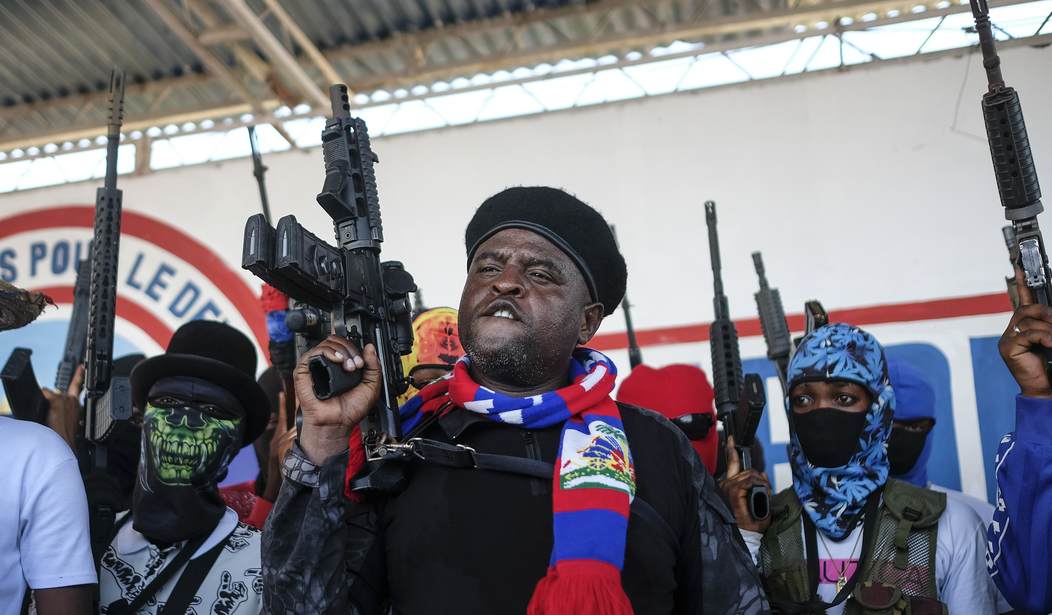
El Salvador has deployed roughly 100 special forces troops to Haiti, with reports of another 100 expected, to join the search for four of its aviation technicians missing after a gang ambush on an armored vehicle. The move, announced by President Nayib Bukele, ups the ante on Haitian gangs. It also raises questions about the overall competence of the UN-authorized Gang Suppression Force (GSF) and how a UN force that seems focused on avoiding conflict will work with Salvadoran troops out to accomplish a mission.
In the Beginning
The incident began when four Salvadorans, described as non-combatant aviation technicians supporting medical evacuations and logistics as part of El Salvador's Task Force Liberty II, a component of the UN's GSF, disappeared on October 18 in the Santo area of Croix-des-Bouquets, on the outskirts of the capital of Port-au-Prince.
According to Salvadoran military statements and accounts shared with the UN Security Council, the men were returning to base from a local market or supermarket when heavily armed gangs opened fire and attacked their armored vehicle with explosives. The vehicle caught fire; the technicians fled it and have not been accounted for since.
Salvadoran helicopters responding to the scene came under fire, and intense fighting blocked repeated land and air attempts to reach them. The incident marked the first major attack on the GSF since it began full operations, and Haiti’s government later confirmed the men had been abducted, calling their safe return an absolute priority.
A Clear Message
President Bukele's message to the Haitian gangsters was unambiguous.
Pou chèf gang yo ak manm gang yo k ap kenbe kat konpatriyòt nou yo an otaj ann Ayiti:
Mesye nou kidnape yo pa konbatan. Yo se teknisyen nan domèn avyasyon ki fè pati misyon nou ann Ayiti, nan kad yon misyon entènasyonal. Misyon nou an gen sèlman pilòt ak pèsonèl teknik, ki gen kòm travay prensipal fè evakyasyon medikal epi sove lavi moun, pa fè lagè.
Men, nou te kidnape yo yon fason lach pandan yo t ap retounen apre yo te fin achte manje nan yon makèt nan zòn nan.
Se poutèt sa, jodi a nou te lanse yon operasyon militè pou pote yo sekou. Nou gen yon sèl objektif: fè kat konpatriyòt nou yo retounen lakay yo vivan, san okenn mal.
Men, mwen vle pou nou menm, chèf gang yo, konprann yon bagay byen klè: atak jodi a pa anyen devan sa k ap vini si nou pa remèt toule kat otaj yo vivan.
Epi pa pran pawòl nou yo pou menas san fondman. Nou deja fini ak gang yo nan El Salvador, e nou kapab fini ak nou tou.
Nou toujou gen tan pou evite sa.
Remèt nou kat konpatriyòt nou yo vivan, san okenn mal, epi tout bagay ap retounen jan sa te ye anvan kidnaping lan.
Desizyon an nan men nou.
— Nayib Bukele (@nayibbukele)
October 21, 2026
Translation via Grok:
To the gang leaders and gang members holding our four compatriots hostage in Haiti:Our kidnapped men are not combatants. They are aviation technicians who are part of our mission in Haiti, within the framework of an international mission. Our mission consists only of pilots and technical personnel, whose primary job is to carry out medical evacuations and save lives, not to wage war.
However, they were kidnapped in a cowardly manner while returning after buying food at a market in the area.
That is why, today, we have launched a military operation to rescue them. We have a single objective: to bring our four compatriots back home alive, without any harm.
However, I want you, the gang leaders, to understand one thing very clearly: today's attack is nothing compared to what is coming if we do not get all four hostages back alive.
And do not take our word for empty threats. We have already finished with the gangs in El Salvador, and we can finish with you too.
We still have time to avoid this. Return our four compatriots to us alive, without any harm, and everything will go back to how it was before the kidnapping.
The decision is in your hands.
U.N. Force Overmatched
The GSF is probably overmatched by the Haitian gangs. Current reports place its total strength at about 1,500.
It is commanded by a Mongolian general whose name is not Tamerlane, Genghis Khan, or Subutai. The command structure and mix of forces make it almost as if the force was structured so the national components would have minimal trust in the command structure or each other. As best I can determine, the GSF's approximate composition is as follows.
| 1 — | Sri Lanka | 350–800+(planned ~1,100) | Infantry |
| 2 — | Chad | ~400 | Infantry |
| 3 — | Mongolia | ~170 | Force Commander, headquarters, base defense company |
| 4 — | Guatemala | ~150 | Military police company |
| 5 — | El Salvador | ~125 | Aviation unit called Task Force Liberty II |
| 6 — | Bangladesh | ~50 (advance contingent) | Presumed infantry |
| 7 — | Jamaica | ~20 | Headquarters staff and military training team |
| 8 — | Bahamas | ~6 | Unknown |
| 9 — | Belize | ~2 | Unknown |
By Friday, Salvadoran special forces had arrived in Port-au-Prince. A GSF spokesperson confirmed the contingent’s presence “to support ongoing search and security operations” in the Plaine du Cul-de-Sac area, where the force has already engaged gangs, reporting at least seven gang members killed and four GSF personnel wounded in the days of fighting.
Shots Fired
Social media indicated that Salvadoran troops were skirmishing with Haitian gangs.
LLEGAN LAS TROPAS SALVADOREÑAS AL VECINO PAÍS EN BUSCA DE LOS CUATRO SOLDADOS DESAPARECIDOS EN HAITÍ.
Salen a la luz impactantes imágenes que muestran cómo se encuentra el territorio haitiano tras la llegada de las tropas salvadoreñas, quienes desplegaron un feroz operativo de búsqueda para rescatar a los agentes secuestrados por la temida pandilla de los "400 Mawozo". La situación en las calles se torna cada vez más crítica y peligrosa.
¿Podrán las tropas de El Salvador neutralizar a estas bandas criminales?
#Haiti #ElSalvador #400Mawozo #PuertoPrincipe #FuerzaArmada #Alerta #Dajabon #RepublicaDominicana— Franklin Vargas (@FranklinVargasG) October 23, 2026
SALVADORAN TROOPS ARRIVE IN NEIGHBORING COUNTRY IN SEARCH OF THE FOUR SOLDIERS MISSING IN HAITI.
Shocking images have come to light showing the state of Haitian territory following the arrival of Salvadoran troops, who launched a fierce search operation to rescue the agents kidnapped by the feared "400 Mawozo" gang. The situation in the streets is becoming increasingly critical and dangerous.
Can El Salvador's troops neutralize these criminal gangs?
The Haitian gangs are talking smack.
El líder de la banda terrorista haitiana 400 Mawozo, Wilson Joseph, alias “Lanmo San Jou”, envía un mensaje al presidente de El Salvador, @nayibbukele y frontea con su arsenal de municiones. https://t.co/zqp91dxR36
— Noelia Hazim (@HazimNoelia) October 22, 2026
The leader of the Haitian terrorist gang 400 Mawozo, Wilson Joseph, alias "Lanmo San Jou", sends a message to the president of El Salvador, @nayibbukele and fronts with his arsenal of ammunition.
AQUI ESTAN LAS ULTIMAS IMAGENES SUBIDA POR EL LIDER DE LAS BANDAS HAITIANAS, QUE DICEN ESTAR PREPARADOS A @nayibbukele Y AL EJERCITO SALVADOREÑO, PARA CUALQUIER INCURSION EN SU TERRITORIO** https://t.co/1CHfmte5AM
— Rolfy Martínez (@RolfyMartinez) October 23, 2026
HERE ARE THE LATEST IMAGES UPLOADED BY THE LEADER OF THE HAITIAN GANGS, WHO SAY THEY ARE PREPARED FOR @nayibbukele AND THE SALVADORAN ARMY, FOR ANY INCURSION INTO THEIR TERRITORY
High Stakes
Sources indicated the Salvadoran troops would operate under GSF command, but there is reason to doubt just how close that relationship will be. Both the Haitian gangs and President Bukele have laid down markers. Some of Bukele's contemporaries in the region are already throwing shade. A prominent political commentator in the Dominican Republic, Humberto Salazar, has framed this as Bukele's Waterloo:
¿BUKELE Y SU WATERLOO?
Con el anuncio del envío hacia Haiti, desde El Salvador, de un contingente de 3000 militares, cuya misión es encontrar a los 4 miembros de las fuerzas armadas de ese país, secuestrados el pasado domingo, cuando penetraron en territorio dominado por las pandillas y fueron atacados por una pandilla de irregulares armados, se avizoran en las próximas horas fuertes enfrentamientos armados.
A estas horas, y sabiendo cómo se resuelven las cosas en Haití, las probabilidades de que estos militares continúen vivos son mínimas, así que si no hay posibilidad de negociar nada, y por lo tanto lo que se plantea es un enfrentamiento armado entre tropas de El Salvador y las pandillas que son dueñas del territorio donde fueron atacados y secuestrados los militares centroamericanos.
Según lo publicado en la prensa internacional, los responsables son dos organizaciones criminales que dominan el área de “Croix des Bouquets”, una de ellas dirigida por Claude Celestin, quien es cabeza de la pandilla Chen Mechan (perros rabiosos), y Wilson Joseph (“Lammo San Jou) líder de la banda 400 Mawozo.
En el día de ayer, este último desafió públicamente al presidente Nayib Bukele en un vídeo publicado en las redes sociales, donde advirtió que no se irá de Haití, y mostró miles de municiones y pertrechos con arma de diversos calibres, que según el están esperando a los salvadoreños.
Tenemos entonces la bandeja servida para un enfrentamiento armado a solo 45 kms de la frontera de la República Dominicana y Haití, de un ejército de pandilleros armados sin nada que perder, frente a tropas regulares de El Salvador, que pelearán una guerra urbana en las calles de un país que no es el suyo y es absolutamente desconocido.
Ya en el pasado reciente, los Estados Unidos en 1994 mando 20,000 soldados e intentó organizar a Haití para que se volviera a la senda de lo que ellos llaman democracia, y luego en el 2004 invadieron de nuevo junto a Canada, lo que terminó en la creación de una fuerza multinacional, la Minustah, que terminó en el más absoluto fracaso, es decir, estamos metidos en un tema que no tiene solución.
Si hay alguien que tiene experiencia en combatir pandillas lo es Nayib Bukele, el presidente de el Salvador, su historia de combate a las “Maras” está a la vista de todos, solo que Haití no es el terreno amigo donde peleó esa guerra, un país de habla y cultura hispana donde jugaba de local, el país caribeño es un transplante de África en América, con una historia de violencia típica de las sociedades primitivas.
Cuando Napoleón envió a sus tropas a sofocar la revolución haitiana en 1802, pensó que miles de solados podrían devolver la colonia a sus dueños, pero solo un año después, Dessalines y la fiebre amarilla los obligó a rendirse, ¿será Haití el Waterloo de Bukele?.
El futuro dirá.
— Humberto Salazar (@drhsalazar) October 23, 2026
BUKELE AND HIS WATERLOO?
With the announcement of the deployment from El Salvador to Haiti of a contingent of 3,000 troops, whose mission is to locate the 4 members of that country's armed forces who were kidnapped last Sunday—when they entered territory controlled by gangs and were attacked by a gang of armed irregulars—fierce armed clashes are looming in the coming hours.
At this point, knowing how things are resolved in Haiti, the chances of these soldiers still being alive are minimal. So, if there's no possibility of negotiating anything, what we're facing is an armed confrontation between El Salvador's troops and the gangs that control the territory where the Central American soldiers were attacked and kidnapped.
According to reports in the international press, those responsible are two criminal organizations that dominate the “Croix des Bouquets” area. One is led by Claude Celestin, head of the Chen Mechan gang (rabid dogs), and the other by Wilson Joseph (“Lammo San Jou”), leader of the 400 Mawozo gang.
Yesterday, the latter publicly challenged President Nayib Bukele in a video posted on social media, where he warned that he won't leave Haiti and displayed thousands of rounds of ammunition and gear with weapons of various calibers, which he said are waiting for the Salvadorans.
We thus have the table set for an armed confrontation just 45 km from the Dominican Republic-Haiti border: an army of armed gang members with nothing to lose facing off against regular El Salvadoran troops, who will fight an urban war in the streets of a country that isn't theirs and is utterly unknown to them.
In the recent past, the United States sent 20,000 soldiers in 1994 and tried to organize Haiti to bring it back to what they call democracy. Then in 2004, they invaded again alongside Canada, which ended in the creation of a multinational force, MINUSTAH, that culminated in utter failure. In other words, we're dealing with a problem that has no solution.
If there's anyone with experience fighting gangs, it's Nayib Bukele, the president of El Salvador. His history of battling the “Maras” is there for all to see. The only issue is that Haiti isn't the friendly terrain where he fought that war—a Spanish-speaking country with Hispanic culture where he played on home turf. The Caribbean nation is an African transplant in the Americas, with a history of violence typical of primitive societies.
When Napoleon sent his troops in 1802 to crush the Haitian Revolution, he thought thousands of soldiers could return the colony to its owners. But just a year later, Dessalines and yellow fever forced their surrender. Will Haiti be Bukele's Waterloo?
Time will tell.
Bukele replied to this commentary:
Many messages, analyses, and comments like this one, ensuring that Haiti's gangs are not like those in El Salvador; that they are bloodthirsty, that they are heavily armed, that no one has been able to defeat them, that all missions have failed, that we are falling into a trap, that we don't know what we're up against, that it will be our ruin, that we're heading toward our Waterloo.
But when God grants us victory, the same people who say all that today will change their tune. They'll say it was always easy, that anyone could have done it, that Haiti's gangs weren't as dangerous as people thought.
In short, we've never listened to them, and we're not about to start now.
Everyone who has enlisted is a believer, and we have entrusted this mission to God, while Haiti's gangs are satanic, and it's public knowledge that they carry out human sacrifices.
God will grant us victory. The Creator of the Universe is with us.
Deuteronomy 28:7
“The LORD will cause your enemies who rise against you to be defeated before you; they will march out against you in one direction but flee from you in seven directions.”
U.S. Support
Other aspects of this operation indicate it is larger than Bukele making good on his word.
Impresionantes imágenes de paracaidistas del Ejército de El Salvador rezando a bordo de un autobús antes de partir hacia Haití.
Los militares se dirigían al aeropuerto para abordar un C-17 Globemaster III con destino a Puerto Príncipe, donde se sumarán a las operaciones de la GSF contra la pandilla 400 Mawozo.
Según nuestro contacto, el contingente está compuesto por 100 elementos de Fuerzas Especiales, procedentes de tres unidades: el CEAT, el Batallón de Paracaidistas y el Grupo de Operaciones Especiales (GOE). Entre ellos viajan los conocidos como Comandos Hachas y Comandos Prales, tropas de choque con una preparación comparable a la de los kaibiles guatemaltecos.
Nuestro contacto también señala que llevan ametralladoras M60, carabinas Arad y fusiles de francotirador Mk22, además del armamento individual de los operadores.
— Armapedia (@Armapedia) October 23, 2026
Stunning images of El Salvadoran Army paratroopers praying aboard a bus before departing for Haiti.
The soldiers were heading to the airport to board a C-17 Globemaster III bound for Port-au-Prince, where they will join GSF operations against the 400 Mawozo gang.
According to our contact, the contingent consists of 100 Special Forces personnel from three units: CEAT, the Paratrooper Battalion, and the Special Operations Group (GOE). Among them travel the renowned Comandos Hachas and Comandos Prales, shock troops with training comparable to that of Guatemala's kaibiles.
Our contact also notes that they are carrying M60 machine guns, Arad carbines, and Mk22 sniper rifles, in addition to the individual operators' weaponry.
What countries operate the C-17? El Salvador is not among them. Canada is the only other operator besides the U.S. in the Western Hemisphere, and the odds of the Canadians doing anything vaguely aggressive approach zero. The fact that a USAF aircraft carried El Salvador's intervention force to Haiti implies official Washington approval.
On Friday, a string of charter flights ran from Washington-Dulles to Port-au-Prince: two Gulfstream IVs and one Dassault Falcon 2000. The US military operates Gulfstreams; the odd one out is the Dassault Falcon, which isn't military, but is probably operated by some government-adjacent cutout.
Three charter flights from Washington, DC to Haiti today — two already in the air. Another three flights from El Salvador — including one that is likely a US Air Force plane. Yesterday, @Jacquiecharles confirmed Salvadoran special forces had begun arriving, and more were on the way.
— Jake Johnston (@JakobJohnston) October 23, 2026
The last aircraft on the list is a USAF C-130J Super Hercules departing from San Salvador. This one undoubtedly is carrying more Salvadoran troops.
The Return of Blackwater, Sort of
And no story would be complete without a wildcard. Erik Prince's Vectus Global is also operating in Haiti. This is the successor to the famous Blackwater private military contractor Prince founded, which gained notoriety in Iraq. The company is believed to have about 200 personnel on the ground. They are alleged to have carried out thousands of drone strikes, killing well over a thousand people. Because they are contracted directly with the Haitian government, and the Haitian government has permitted Bukele to send his forces into Haiti, it is probably safe to assume Vectus Global will be providing kinetic and non-kinetic support to the Salvadoran force.
Correlation of Forces
I'm no authority on the capabilities of El Salvador's top-tier forces. They are battle-hardened through their struggle with MS-13. And I'm confident neither Bukele nor the U.S. would have moved them into combat this rapidly if they weren't competent. I'd be shocked if the Salvadoran hostages were recovered, but Bukele's guys will build a pyramid of skulls one way or another. Erik Prince's people bring a reconnaissance and strike capability to fill in any gaps in the Salvadoran force package. On the whole, I think this will turn out to have been a very bad piece of thinking on the part of the Haitian gangs, which may deter them from killing people other than Haitians:
🚨Biden abandoned America! In memory of the brave missionaries their sacrifices shouldn’t be forgotten. 🙏🏼 🇺🇸🚨Republican Missouri State Rep. Ben Baker’s daughter and son-in-law died after violent gangs attacked them while they were serving as missionaries in Haiti, Baker said in a Friday Facebook post.
Baker wrote early Friday morning. “My heart is broken in a thousand pieces. I’ve never felt this kind of pain.” he also wrote.
“Most of you know my daughter and son-in-law Davy and Natalie Lloyd are full time missionaries in Haiti. They were attacked by gangs this evening and were both killed. They went to Heaven together. Please pray for my family we desperately need strength. And please pray for the Lloyd family as well. I have no other words for now.”🙏🏼😔 
— April Color (@ColorApril) May 24, 2024
No matter the outcome, Haiti seems destined to remain pretty much as it has been for the last 222 years.
Editor's Note: The Democrat Party has been infected by socialism, and it's spreading FAST. Democrats are claiming there's nothing to worry about, but we know the truth.
Help us continue to shine a light on the socialist takeover by joining RedState VIP. Use promo code FIGHT to get 60% off your VIP membership.

Join the Conversation
VIP members get the ability to comment on articles.