
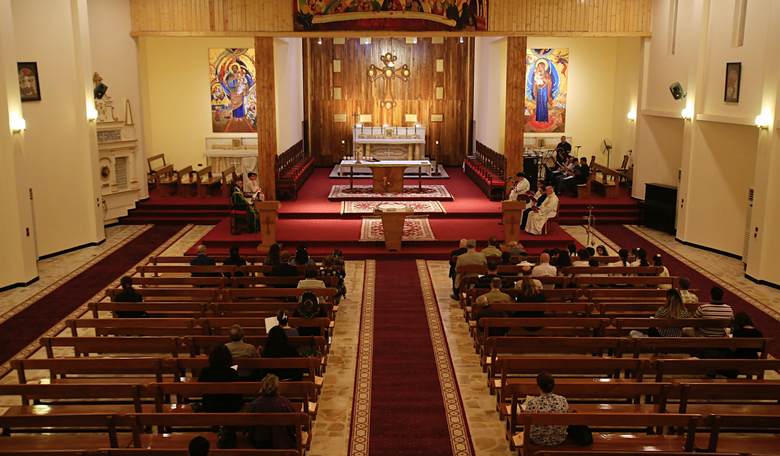
If you believe that religious faith and beliefs have been a vital part of the United States’ national character, strength, and unity since the Pilgrims’ arrival 401 long years ago, then a new Gallup Poll released this Holy Week will profoundly disturb you.
For the first time in 80 years of polling, Gallup’s research found that a majority of Americans do not belong to any religious institution — church, synagogue, or mosque. That doesn’t necessarily mean these growing numbers of Americans living outside any religious organization do not have a faith or pray with others as has been so common for generations.
But it is a revealing indicator of ongoing changes within traditional institutions such as churches and families and even beliefs in government institutions.
True, the United States was not the United States in those earliest harsh days of settlement in the early 1600s. But religious beliefs and membership in an organization of faith certainly were an essential part of that early challenging life inhabiting the rugged, wild new land.
Historically, it’s been a regular and predictable observation of many Americans, clustered especially in older generations, that today’s citizenry is going to hell, figuratively speaking, of course. A belief in the ongoing decay of mores, tastes in clothing and fashion, and even language sliding from the unorthodox toward the incoherent and vulgar. Of noisy music offensive to the ears, of uncouth literature and entertainment offensive to the eyes. Of unconventional public and private behaviors.
All of which have combined to augur the decline in national hope, ambition, and strength that have weakened and hollowed out from within open societies throughout history. Think the declines of ancient Greece, the mighty Roman Empire, and numerous societies and cultures moving forward through time.
Now comes the noted polling organization with statistics documenting the fading of faith in a divided and cynical society.
In a random telephone sampling of 6,117 adult Americans from 2018-2020, Gallup found:
- That only 47 percent of Americans said they belong to a church, mosque, or synagogue. That’s down from 50 percent two years before and a plummet of 22 points from 70 percent in 1999. This is the first time in eight decades of Gallup polling on religion that only a minority claim membership.
- That Democrats are the cohort showing the single largest decline in church membership between 1998 and last year. going from 71 percent membership down to 46 percent.
- Every demographic group surveyed declined at least 10 percent, except Protestants at nine percent.
- Among religious groupings, the decline in membership was steepest among Roman Catholics. Their membership total dropped a full 18 points (from 76 percent down to 58 percent) while Protestants dropped only nine points (from 73 percent down to 64 percent).
- Church membership, as you might imagine, is strongly correlated with age. Among U.S. adults born before 1946, 66 percent belong to a specific church. However, among baby boomers, church membership drops to 58 percent. Among Generation X it’s 50 percent and among millennials down to 36 percent.
Church closures through most of 2020 may have broken the attendance habits of many, yet to return.
Gallup identified two other major reasons for substantial declines, besides the aging and inevitable passing of the most fervently religious population cohort, seniors.
One reason is more adults say they have no religious affiliation. So, it makes sense you wouldn’t be joining a particular institution then. The other is that even among those who do maintain a religious affiliation, more are choosing not to become members in a specific institution.
Declining memberships and attendance then cause resulting ripples by churches’ declining revenues and resources to perform their many social functions.