
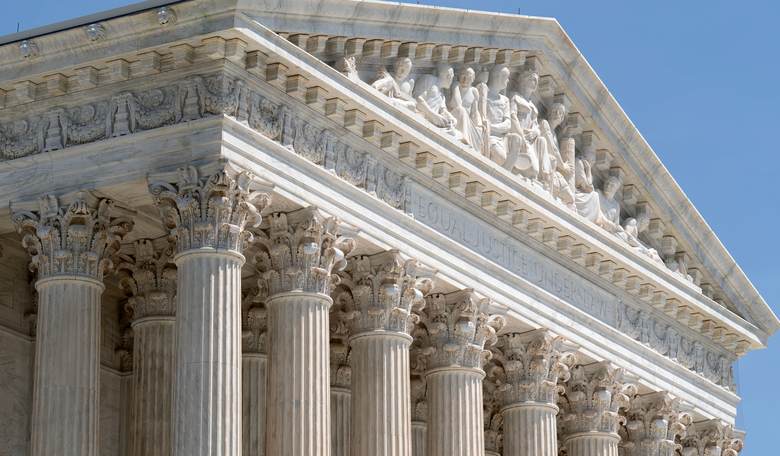
When the Supreme Court decided in Louisiana v. Callais to eliminate race-based drawing of congressional districts, it was considered a big win for Republicans. Many states in the South began launching redistricting projects to eliminate districts that were forced on them through particular readings of the Voting Rights Act.
The Callais case, however, isn't completely settled yet. While the Supreme Court's role is over, the state of Louisiana has to show it has rectified the injury to the original plaintiff, a man by the name of Callais.
A hearing is set for October 27, in which Louisiana Attorney General Liz Murrill will go before a three-judge panel at the 5th Circuit and say that Louisiana has resolved the issue and that the case should be closed. The plaintiff's attorneys, however, are planning to go a step further and say that it's only partially resolved. They believe that the one remaining majority-Black district in Louisiana is also an unconstitutional race-based district, and that when Callais was moved into Louisiana's 2nd Congressional District (represented by New Orleans Democrat Troy Carter), he was moved from one gerrymandered district into another.
One of Callais' attorneys, Paul Hurd, had previously hinted this would be their next move. A frequent guest on the Moon Griffon Show, a statewide syndicated show, Hurd suggested they could take a look at LA-2. That seems to be what the Callais team is working on next.
Murrill will be arguing before the three-judge panel that the issues in the Callais case have been remedied and, thus, the case should be closed. The Callais team will argue that the issues are only partially remedied, so the case can't be closed.
However, the stretch of Louisiana that covers the 2nd Congressional District is both largely blue and largely Black. From parts of Baton Rouge over into and through New Orleans, there is a very high population of Black voters, meaning a determination that the district is racially gerrymandered, rather than a naturally occurring majority-minority district based on raw population numbers, could impact voter distribution throughout neighboring districts.
A map that would have to be redrawn after this midterm election would likely push a higher number of Democrats into House Majority Leader Steve Scalise's district, a prospect that national Democrats would salivate over. It could also affect other districts across the state.
But the Callais team believes that it's a fight that needs to be continued. The hearing to do so takes place on October 27. Two of the three judges on the panel are Trump appointees. The other is a Clinton appointee.