
When it comes to next month's midterm elections, "It's the economy, stupid" will, as always, apply. So we're probably paying more attention to economic indicators than usual as a consequence of that.
Case in point: The initial September jobs report is in, possibly the last jobs report we will see before the midterm elections, and it's something of a mixed bag. Let's look at some specifics.
First, nonfarm payrolls didn't meet expectations.
Nonfarm payrolls rose a seasonally adjusted 29,000 for the month while the unemployment rate increased to 4.2%, the Bureau of Labor Statistics reported Friday. Economists surveyed by Dow Jones had been looking for job growth of 84,000 and an unemployment rate of 4.1%.
In addition to the weakness in September, the August jobs count was revised lower to reflect a gain of 133,000 while July switched from a gain to a loss as payrolls fell by 10,000. The revisions in total showed 60,000 fewer jobs than previously reported.
Market reaction was swift to the report, with traders interpreting the soft jobs numbers as good news as they likely further cemented the Federal Reserve staying put at its October meeting.
The markets are indeed up as of this writing; the Dow Jones has ticked up over 200 points for the day, holding at 51,132; the Nasdaq is doing better, up 366 points at 30,860. Bear in mind those are snapshots, but the trend is upward for both. But, while the jobs report wasn't all we might have hoped for, there are nonetheless a few bright spots in the report.
The household survey, which is used to calculate the jobless level, was considerably better than the establishment survey, which is used to derive the payrolls count.
Household employment rose by 406,000 for the month, while the labor force swelled by 485,000 and the participation rate, which counts those working or actively searching for a job as a share of the total labor force, increased 0.2 percentage point to 61.8%, its highest since May.
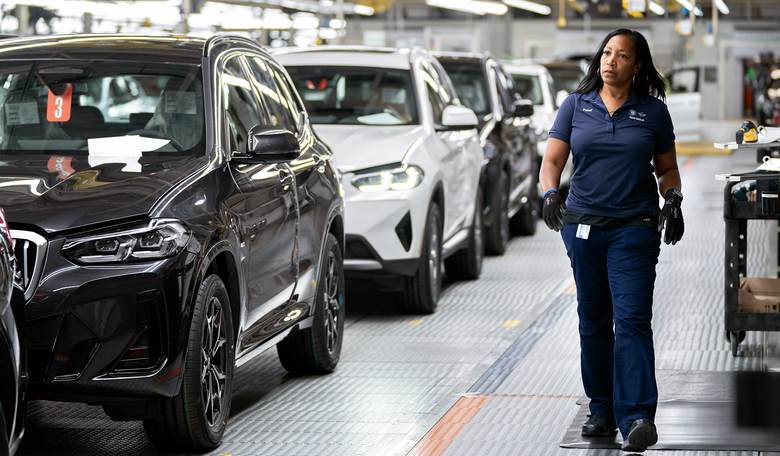
These are more encouraging numbers, and even more so when we note that much of the jobs gained came from healthcare (+17,000 jobs), construction (+11,000 jobs), and manufacturing (+9,000). Better still, government employees fell by 17,000; we note that the numbers of federal employees have been continually dropping since January 2025.
This brings the question about the next Federal Reserve meeting on October 27-28, only days before the midterms, and whether they will raise interest rates; this has been a key bone of contention between the Fed and President Trump, who insists that the Fed has kept interest rates too high. This mixed jobs report may dissuade the Fed, at least, from another interest rate hike.
GDP growth, however, remains strong.
Earlier this week, the Commerce Department revised its count of both first- and second-quarter gross domestic product growth, to 2.5% and 2.2% respectively. The Atlanta Fed is tracking third-quarter GDP at 3.7%.
So, again, the September jobs report is something of a mixed bag going into the midterms. There are some bright spots there the House and Senate Republicans can lean on in their sprint to the finish, most notably the steady GDP growth and the growth in manufacturing and construction jobs; those are solid, good-paying, steady jobs. For any nation to see long-term prosperity, it has to be a nation that makes things, and those numbers indicate we're moving in that direction.