
Could there be a new deal with China that will benefit American farmers? Possibly.
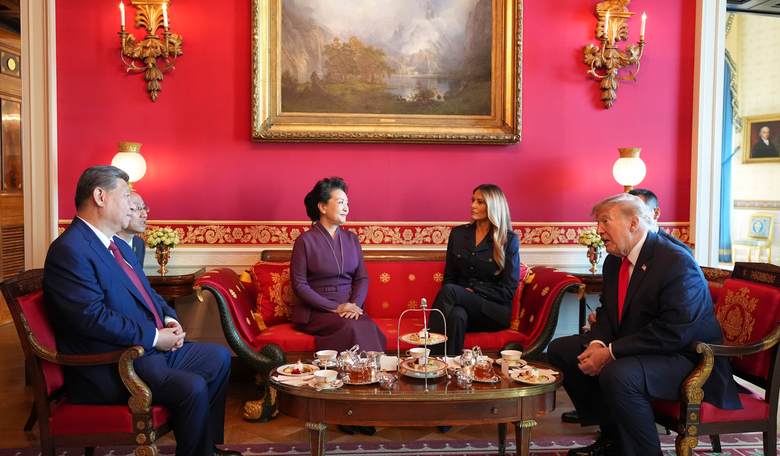
President Trump and Chinese President Xi Jinping have apparently arrived at a tentative trade deal, which would seem to include trade in agricultural products. President Trump, speaking from the Oval Office on Friday morning during a farewell tea with President Xi, made some comments about the deal.
.@POTUS: "I think our farmers are going to be very happy — a lot of very positive things happened... Great things for both countries. It's just been very, very productive." https://t.co/nUByGPElXk pic.twitter.com/69wDC0xWCj
— Rapid Response 47 (@RapidResponse47) September 25, 2026
In the first clip, the president said:
And, we'll be speaking a lot. I think our farmers are going to be very happy. A lot of very positive things happened. But, America's very happy about this visit, and I'm sure China's very happy also. Great things for both countries. And, it's been just very, very productive. And thank you very much.
In the second:
Well, thank you very much, everybody, we've had a tremendous visit, from two spectacular people, and, we really enjoyed it. I think we've made tremendous strides. We've made great strides, very positive for both countries. Thank you very much, and we appreciate the fair coverage. It's been very fair. We appreciate it.
There's not a lot of information there, but one report indicates President Xi is pleased with whatever deal has been struck, as well.
Chinese President Xi Jinping said the latest round of economic and trade consultations had produced a “new joint arrangement”, describing it as good news for businesses and people in both countries as well as the global economy, according to China’s state-run Xinhua news agency.
Details of the arrangement were not immediately disclosed. The announcement came after US Treasury Secretary Scott Bessent said Washington and Beijing had agreed to extend their existing trade truce until January 10, 2027, giving negotiators more time to work on unresolved economic issues.
The trade in agricultural products between the U.S. and China is considerable; even after tensions on trade and other matters between the two major geopolitical players, U.S. agricultural exports to China amounted to $27 billion, about 15 percent of all American agricultural exports. Soybeans are a primary export, making up almost half of all American agricultural exports to China. Other exports include beef, cotton, and corn (maize). China has alternatives, most notably for soybeans, including Vietnam, Indonesia and India, but the United States remains a primary supplier of soy to China. Such exports are actually down from a high of $40 billion as recently as 2022, but perhaps a new trade deal will move that number up again.
On the other hand, the U.S. imports as much as $327 billion in foodstuffs from China, including fruits and vegetables, teas, spices, and even snack foods. That's an enormous trade imbalance, but we'll have to await more details of any proposed deals to determine to what extent that imbalance may be changed.
Relations with China have been tense over the last few years, and it's not at all clear any agricultural trade deal may change that. However, it's a historical truism that countries that do business together are rather less likely to go to war with one another, making the jaw, jaw side of the equation likely to hold off the war, war. Fortunately, if there's one thing President Trump is good at, it's talking to people and making deals.
The real question is how long China will abide by any deal struck — especially after January of 2029.