
Call it the next space race. This one has less to do with planting flags and more to do with who controls the computing infrastructure of the future.
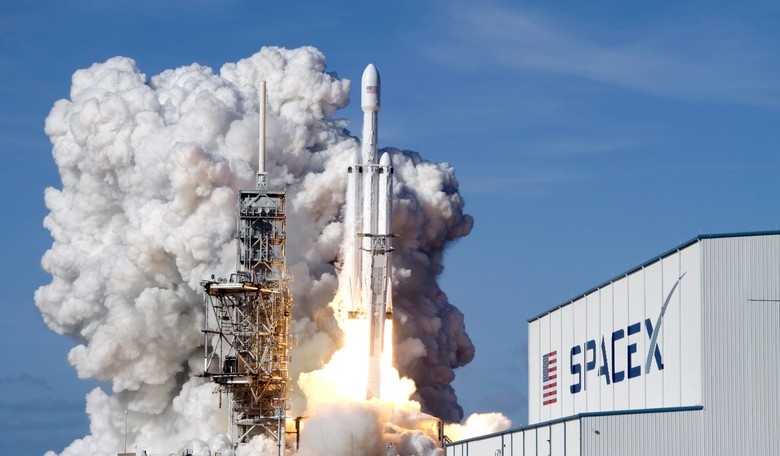
On October 1, Google is putting its AI chips on a rocket. Four of the company's custom Tensor Processing Units (TPUs) are scheduled to launch aboard a SpaceX Falcon 9 from Vandenberg Space Force Base in California. The refrigerator-sized satellite will be the first orbital test of Project Suncatcher, Google's attempt to find out whether AI computing can work off Earth.
Google's satellite, dubbed MVP, isn't much of a data center by today's standards. Its four TPUs provide roughly the computing power of a single server, while the solar panels will generate about one kilowatt of electricity. The hardware should still have enough juice to process simple queries using Google's Gemini AI.
Google's four TPUs have already been through radiation testing at the University of California, Davis. The next test comes with a Falcon 9 launch and conditions the chips never encounter inside one of Google's data centers.
The obstacles are real. Radiation can scramble calculations. Temperatures swing wildly. The chips have to survive the violence of launch itself, and nobody wins a race they don't finish.
Cooling presents its own problem. Google's design moves heat away from the chips through conductive material, aluminum and copper heat pipes, and a radiator. The current setup allows the TPUs to run for about 15 minutes before they have to shut down and cool off.
The short runtime is enough for MVP. Google needs data on the chips, cooling system, and other hardware before it tries anything larger.
Larger is already on the drawing board. Two more satellites are planned for 2027 to test high-bandwidth laser links between spacecraft. Its longer-range plans get considerably bigger: more than 80 satellites flying in formation, with Google also considering a custom spacecraft that could stretch the length of a soccer field.
Google isn't alone, and it isn't winning yet. Elon Musk and Jeff Bezos have both discussed orbital data centers, while SpaceX and Starcloud are already pursuing their own competing plans for computing infrastructure in low Earth orbit. Whoever gets there first could own the infrastructure the rest of the AI industry depends on.
The incentive to win is enormous. AI companies need staggering amounts of electricity on Earth, which means fighting for power generation, securing land, and increasingly battling communities that don't want another massive data center in their backyard. Orbit sidesteps all of it.
Solar power is readily available in orbit, but getting servers there is expensive. Hardware failures also become much harder to deal with when the machine that needs fixing is circling the planet instead of sitting in a data center.
That helps explain why even Google is treating Suncatcher as a long game. Engineers still have to solve the cooling problem, launches remain expensive, and experts say commercially viable orbital data centers remain years away.
“We don’t expect, to be perfectly frank, that we’ll have anything usefully operational in the next few years,” Google senior vice president for research James Manyika said. “Remember how Google was researching for like 15 years, before anything showed up? I think this is going to look like that.”
MVP gives Google a relatively cheap way to find out what breaks, and to get into orbit before its rivals do. The October 1 flight will produce the first real numbers on whether the chips can handle radiation, stay cool enough to operate, and perform useful AI work in orbit. Those results will determine whether Project Suncatcher ever gets anywhere near the proposed 80-satellite stage.
Google supplied the AI hardware. Planet Labs built the spacecraft. SpaceX will launch it aboard a Falcon 9 from California. Four chips. One rocket. The race for space is back, and this time the prize isn't a flag. It's the future of AI.