
The Supreme Court recently confronted yet another high-stakes dispute over election rules, this one involving how the U.S. Postal Service handles mail-in ballots ahead of the midterms. The Court's handling of the dispute reveals a familiar and frustrating pattern: Even with a solid conservative majority, the Court sometimes moves with caution that undercuts clear constitutional priorities and the practical needs of American elections.
Mail balloting has expanded dramatically in recent years. States adopted broader access during the pandemic, and many have kept those systems. The result has been legitimate gains in convenience alongside documented problems with chain of custody, signature verification, late arrivals, and inconsistent standards across jurisdictions. When cases reach the high court, the central question should be straightforward: Does the rule protect the integrity of the ballot and the equal weight of every lawful vote, or does it invite uncertainty that erodes public confidence?
This is a massive victory for those who cheat in elections. Catastrophic for the country.
— Lara Logan (@laralogan) September 15, 2026
Bloomberg) -- The US Supreme Court refused to clear the
Postal Service to enforce new restrictions on mail-in ballots
for the congressional midterm elections, rebuffing the Trump…
A majority of the justices were elevated with the expectation that they would apply the Constitution with discipline. Text, history, and structure matter more than policy preferences or institutional pressure. Yet in election cases, some members of that majority appear hesitant. They appear to weigh institutional reputation, the risk of appearing political, or the desire for narrow rulings more heavily than the need for decisive clarity. The effect is delay and ambiguity at moments when states and voters require firm guidance.
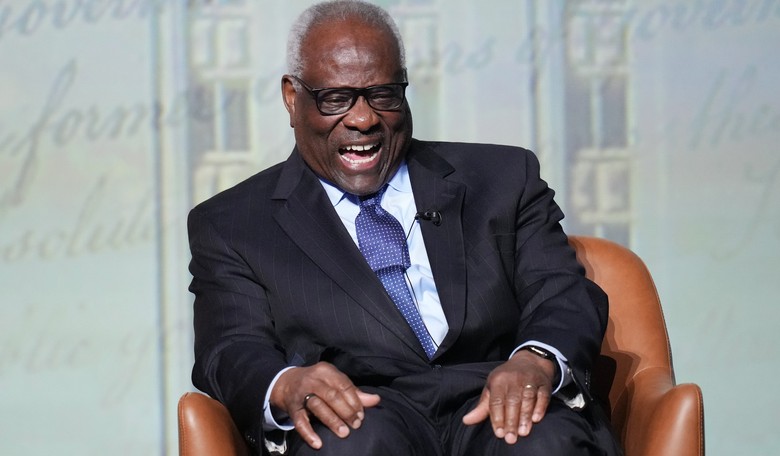
Justice Clarence Thomas stands apart. He has consistently treated election disputes as questions of law rather than political theater. His opinions and votes emphasize original meaning, the authority of states under the Elections Clause, and the basic principle that election rules must be clear and enforceable before ballots are cast.
🚨 IT'S OFFICIAL: Supreme Court Justices Sam Alito and Clarence Thomas issued a SCORCHING DISSENT against SCOTUS' ruling against President Trump's mail-in ballot executive order Alito said it flawlessly: It's TOO CLOSE TO THE MIDTERMS because the STATES and lower judges forced the exact time constraint now being argued by the plaintiffs! And that should NOT be an excuse to strike down an otherwise LEGAL executive order 🇺🇸 I don't understand why conservatives like Brett Kavanaugh botched this one. Seriously — Alito and Thomas are our most reliable justices in modern history, and sadly, they will be retiring sooner than the others Their replacements MUST BE IMPECCABLE.
— Eric Daugherty (@EricLDaugh) September 15, 2026
That approach does not invent new rights or construct new barriers; it simply insists that the rules already written be followed. In a Court that sometimes softens its edges, Thomas’s steadiness provides a necessary anchor.
This is not an argument for reflex. Courts should decide cases on the record before them. But excessive caution carries its own costs. When the Court declines to draw clear lines on mail ballot deadlines, verification standards, or the limits of administrative changes, lower courts and election officials fill the vacuum with conflicting interpretations. Litigation multiplies. Trust declines. The very perception of fairness that the Court seeks to protect suffers.
Conservative legal principles favor federalism, limited judicial invention, and respect for the political branches and the states where the Constitution assigns primary responsibility. Applying those principles to mail ballots means supporting rules that require proof of eligibility, timely receipt, and transparent processes.
Trump is lashing out at SCOTUS after they blocked his mail-in ballot scheme, calling it “a big loss for Republicans.” He attacked mail-in voting, accused justices of being intimidated by Democrats, and declared: “These are not the people I interviewed to serve on the United States Supreme Court.”
— MeidasTouch (@MeidasTouch) September 15, 2026
Voters who need or prefer to vote by mail can do so under rules that safeguard the count. The alternative — loose standards defended as "access" — risks the opposite outcome: fewer Americans believing the results reflect the true will of the electorate.
The current Court has the numbers and the precedents to provide that clarity. It should use them. Institutional legitimacy is not preserved by hedging on core questions of electoral integrity. It is preserved by deciding those questions according to law, without apology and without unnecessary delay. Justice Thomas has shown what that looks like. The rest of the majority would serve the country by matching his resolve.
Election administration is not abstract. It determines whether citizens can trust the process that selects their leaders. A Court that possesses a working majority has both the authority and the responsibility to settle these disputes with precision. Hesitation in the face of that duty does not protect the institution — it weakens the system the institution exists to uphold.