
The Department of War's Office of the Assistant Secretary of War for Industrial Base Policy announced Monday that it is investing $450 million in The Elmet Group, a U.S.-owned, fully integrated producer of tungsten and molybdenum materials and components. The War Department's Economic Defense Unit, created in April 2026, executed the investment and uses private-sector financial experts to counter the economic influence of foreign adversaries. It has three core functions:
- Protect Supply Chains: The unit secures critical materials like tungsten and rare minerals to avoid foreign dependencies.
- Deploy Capital: It helps structure large government investments using private market strategies.
- Target Adversaries: It focuses on countering economic pressure from China, Russia, Iran, and North Korea.
In a statement, Assistant Secretary of War for Industrial Base Policy Mike Cadenazzi said, "This investment reflects the Department's commitment to rebuilding critical industrial capacity in the United States. Expanding domestic tungsten processing will strengthen supply chain resilience, support high-quality manufacturing jobs, and reinforce the production base behind essential defense systems."
Tungsten is a foundational defense material used in missiles, munitions, aerospace, propulsion, naval, undersea, electronics, and industrial manufacturing applications. This investment by DOW will secure a domestic supply of tungsten, an element we currently depend on China for.
What's Going On?
The Trump administration is finally doing what has been ignored for decades: ensuring critical defense materials are not subject to the whims of our adversaries. Rare earths and strategic materials have stopped being a lead story in the media, but they haven't stopped being a vital national interest.
When President Trump came into office, we relied upon Russia and China for our literal ammunition supply; see INSANE: The US Relies on China and Russia for Its Ammunition Supply – RedState. Now, we are on our way to self-sufficiency; see Alaska Now Challenging China on Critical Antimony Supply – RedState.
The rare-earth situation reached a breaking point in October 2025 when China announced export controls on all rare earths refined in China. The bottom line was that any country that purchased rare earths from China surrendered to China the ability to resell the minerals freely or to sell products containing them; Chinese Economic Coercion, Rare Earth Minerals, and Tariffs: Decouple Now or Never – RedState and America's Strategic Blind Spot: Rare Earths and China – RedState.
The Trump administration took the threat seriously. It created a strategic reserve of raw materials; see Project Vault: Trump's New $12 Billion Plan to Shield U.S. From China Mineral Dominance – RedState. More importantly, it started investing directly in companies (see Energy Dept. Now Betting $134M on Recycling Rare Earth Minerals to Shore Up Domestic Reserves – RedState) that extract rare earths; see From Lithium to Rare Earths, New U.S. Technologies Threaten China’s Toxic Grip on Critical Minerals – RedState.
Even though direct U.S. investment conjures images of socialism and industrial policy for libertarians, it is the only way to break China's monopoly. China's strategy has been to watch for promising technologies that threaten its monopoly, then dump large amounts of the targeted material on the open market. This depresses the price. The upstart is suddenly operating at a loss for the foreseeable future. It loses investors and goes belly up. Then China raises the prices. The U.S., having an equity stake in the companies, ensures it can't be put out of business by predatory Chinese trade practices.
About the deal
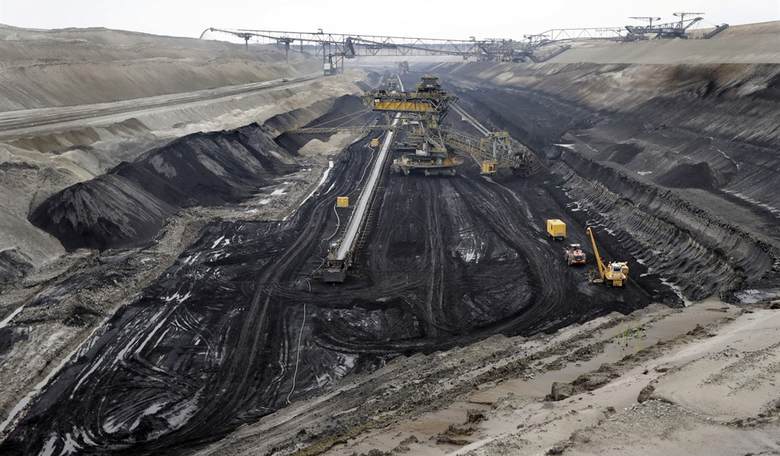
The deal is incredibly important. The Elmet Group will expand domestic manufacturing, mining, processing, and raw material supply. Mining operations will take place in Maine, Michigan, and Ohio. Significantly, $150 million is earmarked to reopen the Springer Tungsten Complex in Nevada. This abandoned tungsten operation has an estimated two million tons of tungsten ore.
The company has also secured a US Defense Logistics Agency contract worth up to US$2 billion to help rebuild the National Defense Stockpile. This part of the deal prevents China from driving The Elmet Group out of business by locking in a revenue stream.
Getting real
Ralph Waldo Emerson is credited with saying, "A foolish consistency is the hobgoblin of little minds." If that is the case, then that particular hobgoblin was working his butt off today. The guys from the Cato Institute took valuable time out of beating the drum for open borders and amnesty for all, only to be shocked when the U.S. government took action to protect the nation from foreign enemies. I would post some of the comments, but most of them have blocked me. This would qualify as a summary, though I don't know if the account is affiliated with Cato.
FMA Following Marx Again, what could possibly go wrong, again? pic.twitter.com/bNl7lf7yjh
— Justin Havens (@JustinHavens10) September 15, 2026
Even though Cato's VP says this is 33 deals, professionals put the number higher. The value may be as much as $28 billion.
To be clear, none of these deals involve the U.S. government taking a majority stake in the enterprise. Typically, they involve equity, warrants, convertible securities, and golden shares. The latter gives the government a major say, if not an outright veto, in corporate governance.
The U.S. federal government has become one of the more active equity investors in strategic industries, and it has done so with remarkably little fanfare. Since January 2025, Washington has announced roughly $27.6bn across 37 deals involving equity or quasi-equity stakes in public and private companies. The stakes span semiconductors, critical minerals, quantum computing and energy, with the first two sectors alone accounting for more than 80 percent of total deal value.
The deals cover semiconductors and advanced computing; critical minerals extraction and processing; and steel, nuclear, and defense systems. And, of course, the most famous deal was the Pentagon buying Venezuela's oil output: see Trump's Oil Deal Is the Monroe Doctrine With a Term Sheet: 100-Year Rights and Beijing Locked Out – RedState.
Bottom line
The idea that we can rely on the "free market," such as it is, to keep the nation's supply of strategic, warfighting materials secure when about 80 percent of those materials come from our two major potential enemies is nonsense. After decades of sloth and neglect, the administration has chosen to ensure self-sufficiency by requiring American companies to produce those materials. The fact that Cato and libertarians, in general, are torqued over that decision not only shows that it is correct but makes it much sweeter.