
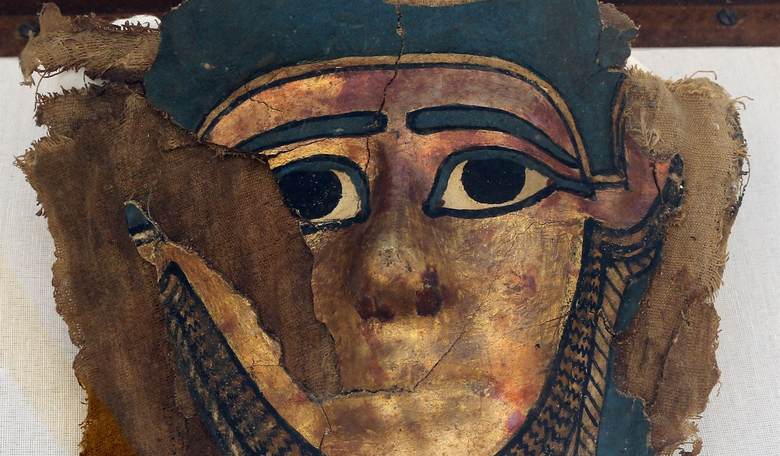
When you think of the Department of Homeland Security, you imagine immigration enforcement, terror prevention, and intelligence gathering. If you’re like me, however, the first thing that comes to mind is not recovering black market antiquities.
Turns out they do that too, and on Thursday, they posted on social media that an ongoing operation in Florida had recovered thousands of historic objects from illicit smugglers. It was one of the largest such busts in their history:
These belong in a museum!
— Homeland Security (@DHSgov) September 3, 2026
@HSITampa, with assistance from @CBP, seized more than 22,000 artifacts from antiquities smugglers.
The artifacts originated from sites across Europe, Africa, the Holy Land, and the Eastern Mediterranean.
DHS is committed to protecting history. pic.twitter.com/EzcMRUBi7b
Homeland Security Investigations (HSI), a division of ICE, which is itself under the umbrella of DHS, explained the operation in a statement:
The identification and authentication process for the large number of items will take time, but preliminary evaluations indicate that some objects may have originated from ancient civilizations dating between 1,000 and 5,000 years ago, from sites across Europe, Africa and the Levant, and the Eastern Mediterranean.
"Preserving cultural heritage is not only a matter of law enforcement, but also a commitment to history and humanity,” said HSI Tampa acting Special Agent in Charge Micah McCombs. “The trafficking of cultural property not only robs civilizations of their heritage, but also channels money into transnational criminal organizations, results in international financial crimes and, in some cases, even funds terrorist activities.”
It’s not just drugs and people that get smuggled:
— Homeland Security (@DHSgov) September 3, 2026
HSI didn’t detail how they managed to retrieve the objects or whether there were any arrests made, but they pointed out that this kind of trafficking is often associated with larger criminal networks.
Cultural property, art and antiquities smuggling is a global crime that enables criminals to profit from stolen history, launder money and fund terrorism. Criminal networks illegally traffic a wide range of cultural property, including ancient artifacts from Egyptian sarcophagi, historic items such as letters from Christopher Columbus, dinosaur eggs and fossils, stolen museum displays, artifacts from excavation sites, and property stolen from conflict zones.
The international demand for cultural property makes the theft a highly profitable crime, with relatively low risk compared to offenses such as narcotics smuggling. Many criminals steal and smuggle cultural property, art and antiquities to fund criminal enterprises and launder profits from other crimes.
It's going to take a long time to identify that many objects and hopefully repatriate them to their countries of origin. HSI is working with researchers and academics to authenticate and preserve the priceless pieces.
HSI Tampa Special Agent Leanna Richardson, the case agent for the investigation, never dreamed that this would be part of her job: “I never imagined I’d hold an object that may have been created more than 4,000 years ago,” she said. “It’s like touring a museum with your own personal archaeologist as a tour guide and you get to touch all the pieces.”
How big is the illicit trade in ancient objects? Nobody knows, because the criminals aren’t exactly giving authorities their accounting info, but it’s estimated to be in the hundreds of millions and possibly even billions.
The RAND Corporation, a nonprofit research outfit, says the market benefits more than just criminals: it’s also an important funding source for terrorist organizations, organized crime, and rogue states. They also argue that it’s a national security threat, but it’s very difficult to detect and stop because of the clandestine nature of their operations.
The crooks will now have 22,000 fewer items to profit off. Hopefully, we’ll soon be hearing from DHS about the arrests of the perps behind the operation.