
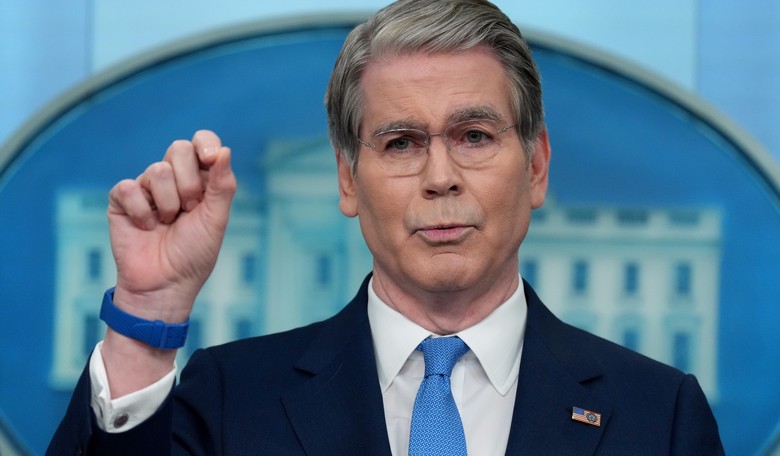
Iran's ruling elites, or at least what's left of them, are feeling the pinch. Aside from much of the upper few echelons of their civil government and most of their military having been disassembled by American and Israeli explosives, now the United States has been squeezing them economically. Secretary of the Treasury Scott Bessent's Operation Economic Outcast is shutting down their economy. That hurts everyday Iranians as well as the mullahs and the other ruling elites, but that may actually help defenestrate the mullahs in the long run.
On Monday, Secretary Bessent appeared on CNBC's Squawk on the Street at the G20 finance ministers meeting in Asheville, North Carolina, with host Sara Eisen on a variety of topics, including Iran.
Scott Bessent makes it clear how screwed Iran is:
— Townhall.com (@townhallcom) August 31, 2026
"We are starting to see their elected leadership openly complain about the state of the economy."
"The main thing they care about is their head staying attached to their neck!" pic.twitter.com/k9d4wgrwLH
Secretary Bessent: I think that Operation Economic Outcast is going to make them want to make a deal. Between that and the blockade, they are cut off. We are starting to see their elected leadership openly complain about the state of the economy. They're speaking to the Iranian hardliners in public. They're talking to the Iranian people. The currency is collapsed. Inflation is...
Sara Eisen: Almost a hundred percent.
Secretary Bessent: Yeah. I think food inflation is much higher; we're seeing gas lines, unbelievable, Sara.
Sara Eisen: But they don't care about their people.
Secretary Bessent: Look. My experience with people like this, the main thing they care about is heads staying attached to their necks.
One small criticism: Iran has no elected leadership as we understand the term. Every elected official has to pass muster with the mullahs. The Supreme Leader (assuming they actually have one still above ground) and his fellow Islamist goblins have the final say on everything that happens in Iran. They, not the Iranian Parliament, are the only ones who can finally approve any deal, as long as the current regime stays in place.
Secretary Bessent also reiterated the administration's conditions for any deal with Iran:
.@SecScottBessent: "The President has been very clear — they have to give up their nuclear program, they have to turn over the highly-enriched uranium, they have to stop their support of proxies, and the Strait has to be open." https://t.co/KNtk5rkSTf pic.twitter.com/Xuc9kLABOD
— Rapid Response 47 (@RapidResponse47) August 31, 2026
Secretary Bessent: The goal here is to create the conditions that they will want to come to the table, and the president has been very clear that they have to give up their nuclear program, they have to turn over the highly enriched uranium, and they have to stop their support of proxies. And the Strait (of Hormuz) has to be open.
Those are indeed the conditions that have been in place all along.
Of Secretary Bessent's comments, though, the "heads on necks" one may be the most illustrative. Iran's leadership, what remains of it, may well soon be on the receiving end of what is, effectively, a peasant revolt, and a quick look through history notes that peasant rebellions, when they succeed, do so for a couple of reasons: The peasants are pushed to the point where they feel they have nothing left to lose, and that there are just so many peasants.
It may well be this, and not the military pressure, that brings the mullahs down. The economic squeeze and the naval blockade may do what the military actions did not; bring an end to the rule of the mullahs once and for all. And it is that, not any deal on any table, that will finally bring Iran out of the dark age that they have been suffering through since 1979.