
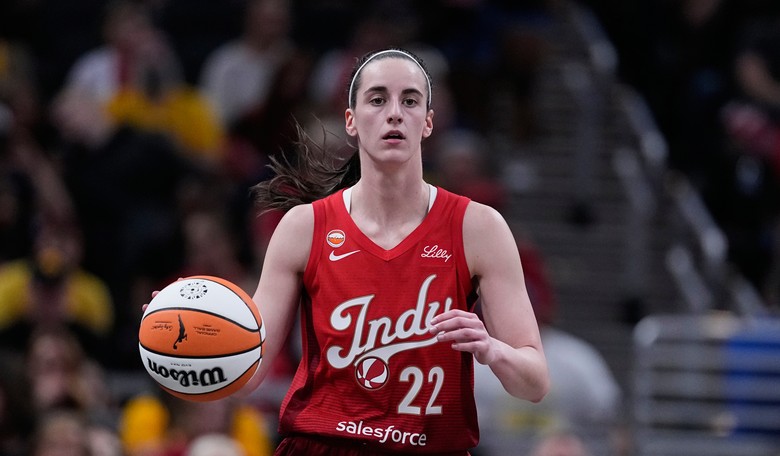
Caitlin Clark has earned her place on the biggest stage women’s basketball has seen in years. The 2026 FIBA Women’s World Cup in Germany and the high stakes surrounding Team USA represent her next major international test. That stage should highlight the player whose hard work has driven unprecedented interest in the WNBA, not dilute it through forced pairings that ignore the on-court and off-court dynamics that fans already understand.
Clark’s arrival in the league changed the conversation. Ticket sales rose, television audiences grew, and young girls across the country began watching more closely. Her shooting range, competitive fire, and consistency have made her a clear positive role model. In Indiana, she has been surrounded by teammates who reinforce the same standard.
🎙️Caitlin Clark says she’s proud to become the first woman ever invited to join the U.S. Women’s National Team to play in the World Cup.
— Fever Updates (@FeverUpdate) August 29, 2026
Reporter: “What about the rest of the team? What about the girls who played before you were even born?”
Caitlin Clark: “If you look at them,… pic.twitter.com/mapU3S7DO8
Sophie Cunningham brings toughness and energy. Aliyah Boston delivers reliable post presence and defensive intensity. Guard Lexie Hull adds another layer of effort and versatility. Together, they have helped turn the Indiana Fever into a destination franchise rather than an afterthought. That progress stems from performance, not narrative.
Angel Reese has drawn attention of her own, much of it tied to rivalry theatrics and a public persona that has frequently targeted Clark. The history between them is not subtle. Fans have watched the exchanges, the gestures, and the comments. Asking these two players to share the spotlight on a national team as if the friction does not exist asks the public to pretend the record is blank.
Caitlin Clark unveils her Caitlin 1s for World Cup action pic.twitter.com/2At4Q8etGZ
— MAJORSPORTSNETWORK (@MSPORTSNETWORK) August 31, 2026
It is not. Team chemistry matters when the stakes rise to World Cup level. Selecting players and framing the story around proven production and shared standards serves the team better than manufacturing joint storylines for media convenience.
The WNBA has spent years searching for sustained relevance. Clark’s presence delivered measurable results through skill and visibility rather than marketing campaigns alone. Her influence extends beyond box scores. Young athletes see a player who works, shoots with confidence, and competes without apology. Pairing that example with voices that have spent time undermining it risks confusing the message. Role models succeed when the example is consistent. Clark, Cunningham, Boston, and Hull have provided that consistency in Indiana. The national team should build on the same foundation.
International competition demands focus. Clark will face experienced opponents who test every part of her game. She has shown the ability to rise to pressure in the college ranks and in her professional career. Giving her a clear runway to lead and produce allows the United States to field its strongest possible group. Performance still decides medals.
Caitlin Clark has touched down in Germany to represent USA Basketball at the 2026 FIBA Women’s Basketball World Cup 👏
— Dee_Lay 🇺🇸 (@DrexelGlen19289) August 31, 2026
📸 USA Basketball pic.twitter.com/y4Sw4SJQ8j
Critics will call any preference for Clark preferential treatment. The numbers and the crowds say otherwise. Attendance figures, viewership data, and the surge in youth interest track closely with her presence. That is not manufactured hype. It is the market responding to excellence. Those with a true appreciation for sports recognize that merit and results matter more than engineered narratives.
Team USA has a chance to present a clear standard: Select and feature the players who have elevated the product through talent and work. Let Clark compete on the international stage she has earned. Surround her with teammates who share a professional approach. Leave the manufactured rivalry stories behind. The World Cup will reward the group that prioritizes winning over messaging. Clark’s body of work already demonstrates what that priority looks like. The rest of the roster and the framing around it should follow the same standard.
This is not about personalities alone. It is about recognizing what has worked. Hard work produced results for Clark and her Fever teammates. The same principle should guide the national team as it steps onto the global stage. Fans respond to excellence. Young players respond to consistent examples. Both are already available. The only remaining step is to trust them.