
Just when it seemed like the United States Postal Service (USPS) was free to implement its new rules governing mail-in ballots ahead of this year's midterm elections, along comes U.S. District Judge Indira Talwani to hit the brakes – again.
And this time, she's thrown in a strange legal twist just to keep things exciting.
As RedState's resident legal eagle Susie Moore reported earlier this week, the U.S. Supreme Court (SCOTUS) cleared the way Monday for the Trump administration to move forward with key parts of its mail-in voting policy. SCOTUS did not rule on the legality of the rule, but said that an earlier challenge had come too soon because the Postal Service had not yet finalized the rules needed to carry it out.
So, USPS finalized the rules, which went into effect Wednesday.
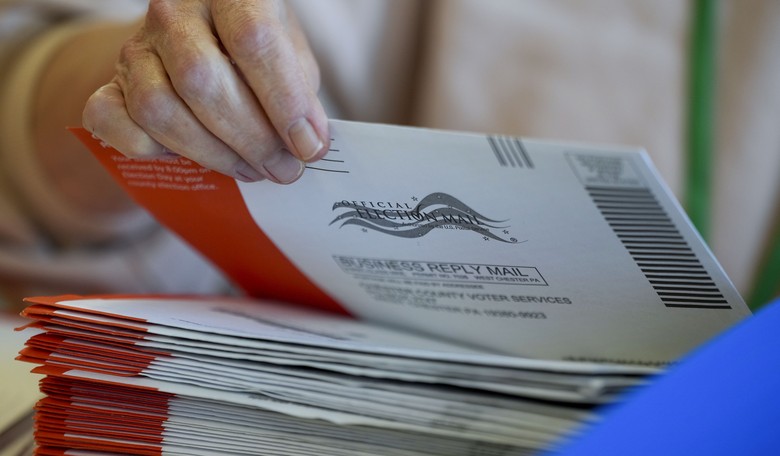
With the midterms just a few months away, the USPS has finalized a strict new rule on how mail-in and absentee ballots are to be handled in federal elections. This new rule, which was announced Friday, would require that states tell the Postal Service who is supposed to be receiving these kinds of ballots, and those envelopes would then have to have unique identifiers on them so that each piece can be individually tracked as it makes its way through the mail system.
With the USPS rule in place, Democrat-led states – which definitely do not want stricter oversight of mail-in ballots – now had something to sue over.
And they wasted no time, running right back to Judge Talwani's courtroom to argue that the finalized USPS rule exceeded the agency's authority and unlawfully placed the Postal Service in the middle of federal elections.
Talwani, an Obama appointee, agreed that the challengers had raised enough questions to justify temporarily putting parts of the new rule on hold, issuing a 14-day temporary restraining order Thursday.
🚨 Judge Indira Talwani has temporarily blocked key parts of USPS’s new mail-ballot rules for the 2026 midterms, just three days after the Supreme Court lifted her earlier nationwide injunction against President Trump’s election executive order. pic.twitter.com/Dhi1mrqh8S
— SCOTUS Wire (@scotus_wire) August 28, 2026
And that brings us to the strange part of the whole thing: The Trump administration essentially had to be given permission to implement the policy so its opponents could launch the challenge the Supreme Court said was actually ready to be heard.
While Talwani isn't technically overriding the SCOTUS ruling – they never ruled on the legality of the USPS rule and simply said challenges to it were premature – she certainly is inflicting some serious legal whiplash on those who'd like to ensure that mail-in ballots are properly tracked and handled ahead of the midterms.
"Based on the record presently before the court, Plaintiff States face irreparable harm where they are required to comply with a likely unconstitutional regulation for which compliance is practically impossible as to the 2026 midterm elections, now little more than two months away," Talwani wrote in her 11-page order. "Most Plaintiff States have already ordered their mail ballots, and some are required by state law to send them to eligible voters as early as next week."
The states, she continued, "have neither time nor funds to design new mail ballots, seek approval of the new designs, order production of mail ballots, update their own election management systems, train election officials to use the USPS portal, and upload citizen data to the portal, all before the midterms."
For now, Talwani's order lasts just 14 days, with another hearing set for September 3.
And with ballots already heading to the printers – and, in some states, already on their way to voters – this legal fight is quickly running out of time.