
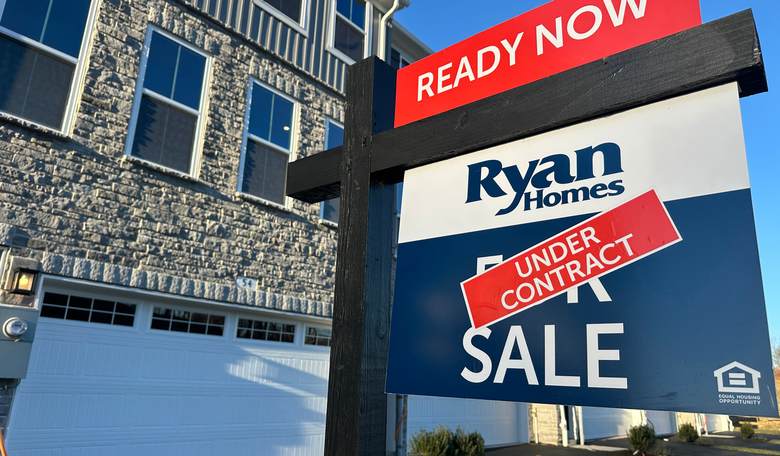
For all the ways technology has changed how Americans live and work, the American Dream still looks a lot like a house with a yard and a white picket fence — a place to raise a family, have friends over for a barbecue, and eventually hand down to the kids. But for Americans trying to save for a down payment while keeping up with rent, and watching as they're being priced out of the home they want due to mortgage interest rates, that picture is getting harder to imagine themselves in. Getting there takes more than hard work when government policies restrict construction, drive up building costs, and increase demand for homes that haven’t been built.
The overwhelming majority of Americans understand that there are multiple reasons for the problem, and several steps to take to combat it. According to recent polling, 90 percent of Americans believe housing costs are rising faster than wages, 88 percent support increased workforce training so there are more qualified construction workers available to be hired, and 69 percent support cutting regulations and permitting delays to allow builders to build faster.
America was already short on housing before the Biden administration’s border disaster. Townhall columnist Jared Whitley summarized estimates placing that shortage between four million and 7 million homes, the result of years of under-building, restrictive zoning, lengthy permitting, and opposition to development. Those estimates differ, but the underlying problem is familiar: More people need homes than the market is supplying.
Then increased demand from illegal immigration also put pressure on prices. Housing and Urban Development Secretary Scott Turner shared the jaw-dropping increase to Fox News in July:
"When we first came in with President Trump, we had open borders. We had tens of millions of illegals in our country. That made housing prices go up about 30 percent rental prices go up 20 percent. And, you know, here in America we prioritize American people, and American people only. American houses are for American people especially HUD-funded houses."
Indeed, a Federal Reserve Bank of Dallas working paper released over the summer estimated that every 1 percent increase in illegal alien workers in an area was associated with a roughly 2.2 percent increase in home prices and a 1.4 percent increase in rents. Those researchers found no statistically significant increase in new housing permits in response to the increased population, so prices rose dramatically in response to the increased demand and relatively fixed housing supply. Though it's just a working paper, it supplies evidence for something Americans competing for apartments have been saying for years: Border policy has housing consequences.
Even without that additional demand, government can run up a housing bill before a foundation is poured. Zoning determines what can be built and where. Approval delays leave builders paying to hold property while waiting for permission to use it. Requirements that rule out smaller lots or different housing types also rule out options for buyers with smaller budgets.
Allowing construction helps. A Pew Research paper from 2025 found that markets expanding housing supply by 10 percent between 2017 and 2023 experienced roughly 5 percent rent declines between 2017 and 2024. Landlords have a harder time demanding more money when prospective tenants have other places to go.
Congress’s housing legislation, which became law in July, addresses permitting, environmental reviews, and zoning practices. But as our own Ward Clark noted, local land-use restrictions and permitting requirements remain major obstacles. Federal guidance won’t accomplish much if those in state capitols and city hall keep finding reasons to say no.
America First Policy Institute's January 2026 housing survey recommends rewarding jurisdictions that remove building barriers, shortening construction delays, and expanding skilled-trades training. We need electricians, plumbers, carpenters, HVAC technicians, and construction workers to build the missing homes. Schools and employers can give young Americans a way into those jobs through career education and apprenticeships, with skills they can use to support their own families. Those are all sound, common-sense recommendations that would make a big difference.
For renters trying to buy, 89 percent of those surveyed in the poll referenced at the beginning of this article support counting timely rent payments toward establishing credit for homeownership. Someone who reliably pays for housing should be able to demonstrate that record when applying for a mortgage, without abandoning sound lending standards.
The good news is that the Trump administration and Congress are working to remove some of the obstacles keeping Americans from owning a home, and voters overwhelmingly support that work. Cut the red tape, reduce the fees, and let builders build enough homes to give families real choices. The house with the yard and the picket fence shouldn’t be something young Americans can only hope to inherit.