
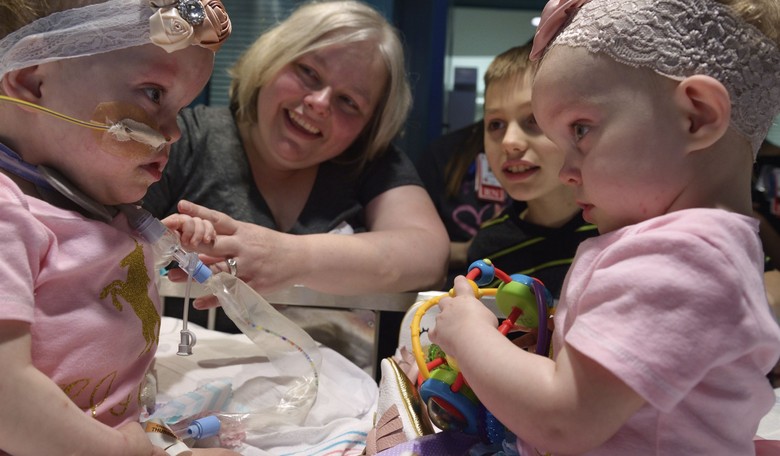
I remember in 1986, when my sister June went into labor at 24 weeks and delivered her daughter Gi prematurely. That was 40 years ago: a time when having an infant this prematurely was even more touch-and-go in terms of survival, let alone thriving. It was an exciting moment when little Gi was stable enough for June to have skin-to-skin contact with her. June cried, and this critical moment, along with lots of prayer, allowed Gi to not just survive and grow, but become a thriving child, teenager, and now, adult.
The medical advances that can ensure preemies continue to hit developmental milestones and beat the odds are now worlds beyond what was available in 1986. Now, a clinical trial for a new technology that allows parents to have skin-to-skin contact with their premature babies promises to be a game changer in the world of neonatal intensive care units.
Medical miracles are the subject of this week's Feel-Good Friday.
A Houston father made history as the first dad in Texas to hold his premature baby skin-to-skin using a new wearable incubator called a "Skincubator," hospital officials said.
Dorian Ojemen’s wife, Tiffany, an obstetrician and gynecologist, gave birth to their twins, Silas and Simone, at Children’s Memorial Hermann Hospital on Aug. 7, at 26 weeks.
The new parents could only touch the twins through the openings of their NICU incubators for almost two weeks before hospital staff introduced the Skincubator.
The wearable device allows critically fragile newborns to experience skin-to-skin contact while staying connected to essential medical equipment.
I love medical miracles, because it shows what medicine and medical innovation were intended to do in the world. Texas seems to have it going on with the innovation at its children's hospitals, because Children's Memorial Hermann in Houston is the first U.S. hospital to test drive the "Skincubator."
Children’s Memorial Hermann Hospital in Houston, TX, is the first hospital in the United States to introduce a revolutionary device called the Skincubator to its Neonatal Intensive Care Unit (NICU). As part of a groundbreaking clinical trial, the device is being studied as a means to allow premature babies to undergo skin-to-skin time with their caregivers much sooner than previously possible, allowing them to receive all the vital benefits that are known to come from skin-to-skin contact.
The Skincubator is a wearable device that makes the transfer of these infants significantly easier, allowing for stable and secure placement of babies on respiratory support to their caregiver’s chest for hours at a time. The Skincubator is also a game-changer for parents in the NICU, who can now comfortably relax, sleep, and even pump while baby remains on their chest.
Touch is an amazing thing. For all humans, just a hug can increase oxytocin — the love hormone — in our systems, lowers our blood pressure, and steadies our heart rates. So, imagine the essential nature of touch in order to properly form the nervous system and development of a new human. Skin-to-skin contact in the early stages of a baby's life is scientifically verified to help stabilize the baby's heart rate, breathing patterns, and encourage growth. It also alleviates pain, supports healthy sleep and brain development, and regulates the nervous systems of both the preemie and the mom. This supports breastfeeding, which in turn strengthens the emotional bond between mom and baby.
But often, because of the tubes, equipment, and other complexities in transferring a medically fragile premature baby out of their incubator and into their mother's arms, the ability for mother and baby to enjoy prolonged skin-to-skin care contact can be difficult.
Daddy Dorian Ojemen was a bit scared to attempt skin-to-skin contact. However, the chance to test drive the Skincubator was something he quickly warmed up to.
"I was just very nervous because they’re very small and I was scared to do skin-to-skin because I just didn’t know how vulnerable they would be," Dorian Ojemen said.
"So when I heard there’s an easy way to have them close to me, I was, like, excited about the opportunity."
Mom Tiffany Ikwuagwu said she was also "excited" by the opportunity, saying that "it's helped me feel super-connected to the babies, because I'm able to hold them for prolonged periods of time...I think that's the best thing, and the babies are recognizing me more, too."
It is quite incredible to see, and I may have experienced some contact oxytocin just watching the Ojemens bond with their twins.
WATCH: