
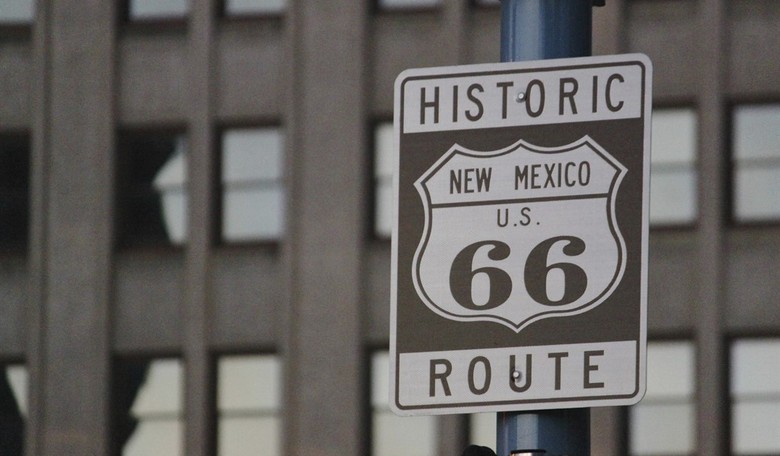
Route 66, AKA The Mother Road, marks its hundredth anniversary this month. Designated in 1926, the roughly 2,448 miles from Chicago to Santa Monica carried Dust Bowl migrants west, wartime supplies and troops, and later waves of families on vacation.
Those travelers needed gas, a meal, and a place to sleep. Ordinary people opened the stations, diners, and motels that met the demand. No central office directed the neon or the pie. The businesses appeared because someone saw a chance to earn a living along a two-lane road that actually went somewhere.
"Highway 66 is the main migrant road. 66—the long concrete path across the country... is the mother road, the road of flight..." - John Steinbeck
That pattern ran from Illinois cornfields through the Oklahoma plains and into the Arizona deserts. Route 66 became the Main Street of America because it let people move and trade without much interference. Bobby Troup’s song promised kicks, yet that song was made much better by Depeche Mode's remix of Route 66 and Behind the Wheel, but I digress.
America has a deep connection to Route 66, the 2,400-mile historic highway stretching from Chicago, Illinois to Santa Monica, California. Now, Route 66 is celebrating its 100th anniversary. Nearly 400 miles of the highway run through the Grand Canyon State. https://t.co/IDa0OboMDb
— KGUN 9 (@kgun9) November 3, 2026
The practical result was more useful: A family could load the car and try for better work in California, or a shopkeeper could stay open by serving whoever rolled in. The road turned mobility into ordinary opportunity. Rural towns gained customers they would not have had otherwise. The same stretch of asphalt that moved freight also moved ambition.
Cable news spends hours describing a country fractured into hostile camps. The surviving stretches of the old highway tell a quieter story. Most of the people who still run the diners, keep the signs lit, and maintain the historic markers are not waiting for new directives from Washington, D.C.
They prefer the government stay off their backs and leave more of what they earn in their pockets. The families who drove the full route this summer described the locals as caretakers who take real pride in the tradition. That pride tracks with ownership. When a family has kept a place open for decades, the attachment is personal, not programmatic.
My American brothers and sisters! I was about to film a video showing you a gift I received from one of my American brothers, and I found this Route 66 belt buckle! Then I noticed it said “100 Years” and “1926–2026” on it. Wait a minute… Is Route 66 really celebrating its 100th anniversary this year?! 😳 I had no idea! 2026 is such an incredible year for America!
— tuuuuu (@tuuu28283) October 24, 2026
The Interstate Highway System eventually diverted the long-haul traffic. Route 66 lost its official designation in 1985. Many towns felt the loss. Some recovered by treating the history itself as the product.
The recovery has been local. Giant dinosaurs, trading posts, and vintage cars draw visitors, but the underlying activity remains the same: private owners figuring out what travelers will pay for and supplying it. The kitsch is obvious. So is the older fact that Americans once built a road system that opened the West and let millions chase a better situation without filing a request.
Route 66 has told the story of America for 100 years today 🚘 Her 2,400 miles of beautiful road connects communities, local economies, and reminds us of how transportation drives USA progress and prosperity 🇺🇸 https://t.co/8ITIX9mohG
— U.S. Department of Transportation (@USDOT) November 11, 2026
What made the country the best was never a single master plan. It was the steady accumulation of small decisions by people who wanted to work, move, and keep most of what they made. Route 66 is one long exhibit of that habit.
On its hundredth anniversary, the road is still there, patched and incomplete, preserved by the same sort of people who have always preferred the open highway to the managed one. They do not need to be told they are good. They simply keep the lights on and the cash register ringing.