
I spent about nine years working in the public school system in Louisiana. I spent a lot of time studying the education system, looking at data, watching what worked and what didn't, reading the various "best practices" that came out every time a new professional development was scheduled.
The public education system in America is deeply flawed. In many areas, it is overrun by activists and union influence. But a handful of states are making real change, especially in the South. Public education is thriving, in a good way, in Mississippi, Louisiana, Arkansas, and elsewhere.
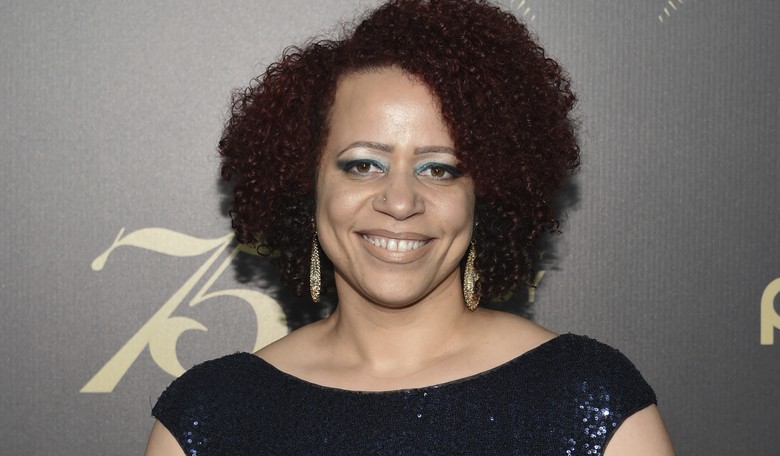
Over at the New York Times, Nikole Hannah-Jones’ wrote an article that is meant to be a damning indictment on the American public education system. She tears it down, using her daughter's plight as proof. This new Times Magazine essay actually reads completely different if you understand the American education system.
It is an argument for school choice, made unintentionally by the author of the incredibly flawed and discredited 1619 Project and one of school choice’s fiercest critics. Here’s the timeline, in her own words.
In 2015, Hannah-Jones and her husband enrolled their daughter, Najya, in pre-K at a “segregated, high-poverty school” in Brooklyn. It wasn’t the best option available to them. They had the money for private school. They had the standing to land in a well-resourced, zoned public school. They chose the Brooklyn school anyway, deliberately, as an act of ideological advocacy, hoping other well-off families would follow their example into struggling schools.
By first grade, Hannah-Jones is describing a lunchroom with no adult supervision and children fighting unchecked. By third grade, a teacher missing so many days that students were parked in the second-grade or kindergarten classroom to fend for themselves. By fourth grade, the year she calls “the worst,” teachers who (by her own account) had stopped grading her daughter’s work entirely and had likely never administered the reading assessments they were required to give. Najya believed she was acing math. Most of what she’d turned in was wrong. Nobody had checked.
The neighborhood school system in New York is atrocious. She knew this before sending her child to one. This is a mother who visited the cafeteria herself, who pulled fighting kids apart, who sat down and read through the ungraded homework page by page. She saw it happen, in real time, year after year. And she kept her child in that system anyway, all to make a point.
Middle school didn’t fix it. At Urban Assembly Unison, the school eliminated homework outright and adopted an “Algebra for All” policy that pushed advanced math onto students, Najya included, before they’d mastered the material underneath it. An outside tutor later found Najya hadn’t even mastered long division or fractions, the building blocks the algebra was supposed to rest on. Najya got A’s at Unison. She also, by her own account years later, “didn’t know anything.”
Hannah-Jones wants readers to see this as evidence of a broken, racially rigged system that owes her daughter something it never delivered. Some of what she documents is real: underfunded schools, high teacher turnover in high-poverty buildings, and the well-established fact that screened, selective public schools skew whiter and wealthier in a city like New York. That part of the argument isn’t fiction. It’s also not the part that determined what happened to Najya.
What determined what happened to Najya is that her parents, fully informed and financially able to choose otherwise, chose a demonstrably struggling school for seven consecutive years, and admit, in the mother's own essay, to reading every warning sign along the way.
Then something remarkable happens in the piece, and it’s the part that should have led the article: as an eighth grader, Najya finally got the freedom to choose her own high school, guided by her own criteria rather than her mother’s cause. She picked a rigorous, selective school her mother had spent a career arguing against.
It was hard. Najya arrived with real academic gaps: the algebra tutor found she didn’t know long division. But look at what actually closed those gaps: targeted tutoring, teachers who intervened directly, and a school built around rigor rather than an ideological experiment. By the end of that first year, she was earning A’s and B’s for real, and she passed the state exam she’d previously failed twice.
What actually happened here is straightforward: a kid got access to a demanding school with real standards, the same access school choice is designed to expand, and the same access her mother spent a decade discouraging other parents from seeking for their own children.
Hannah-Jones’ conclusion is that “there is no absolution." To her, families like hers are complicit for rescuing their own kids while others are left behind. But that’s backwards. The absence of choice is what trapped Najya for seven years. The presence of choice, once her mother finally allowed it, is what pulled her out. If that’s true for a New York Times reporter’s daughter with tutors, connections, and an involved household on call, it’s true tenfold for a lower-income family across the country with none of those resources to fall back on when a zoned school fails their kid.
That’s the actual lesson here, but it's definitely not the one she wants you to take away from it. Every year a child spends in a school that isn’t working is a year that doesn’t come back. My own state, Louisiana, has spent the last several years expanding school choice (education savings accounts, charter access, open enrollment) precisely so families don’t have to wait a decade, or a Pulitzer-winning epiphany, before they’re allowed to choose something better for their own kid. Hannah-Jones had the resources to eventually correct course. Most parents don’t get that luxury if the system tells them to wait their turn.
Her daughter didn’t need her mother’s cause or activism. She didn't need her mother's principled stand. She needed a mom willing to make a choice (years too late by her own accounting) and get her kid to schools where success is sought by the people who actually care.