
Last summer, we celebrated 250 years of American liberty when, on the 4th of July, Independence Day, we marked the 250th anniversary of the signing of the Declaration of Independence. That was a remarkable event in history, when 12 colonies in the New World told the king of one of the greatest powers of the Old World where to head in, and struck out on our own.
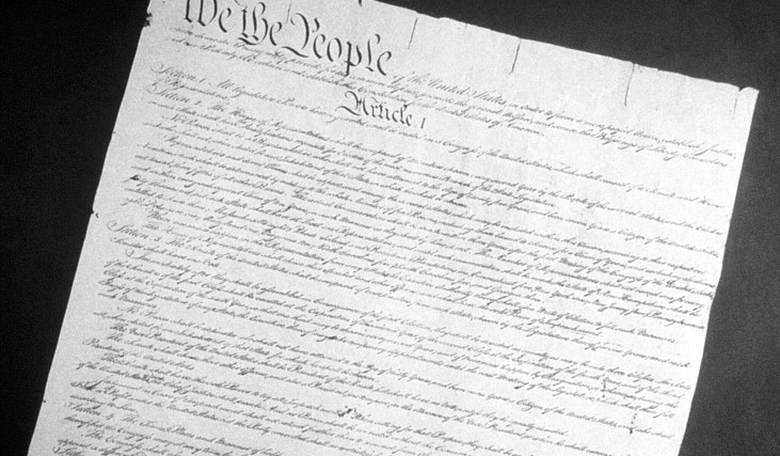
But September 17th may be an even greater day. Why? Well, here's why, and I'm going to tell you: On that date in 1787, the United States Constitution was signed. Independence was great and necessary, but it was the Constitution that made the United States of America the great nation it is today.
On September 17, 1787, the Constitution was signed. As dictated by Article VII, the document would not become binding until it was ratified by nine of the 13 states. Beginning on December 7, five states—Delaware, Pennsylvania, New Jersey, Georgia and Connecticut—ratified it in quick succession. However, other states, especially Massachusetts, opposed the document, as it failed to reserve un-delegated powers to the states and lacked constitutional protection of basic political rights, such as freedom of speech, religion, and the press. In February 1788, a compromise was reached under which Massachusetts and other states would agree to ratify the document with the assurance that amendments would be immediately proposed. The Constitution was thus narrowly ratified in Massachusetts, followed by Maryland and South Carolina. On June 21, 1788, New Hampshire became the ninth state to ratify the document, and it was subsequently agreed that government under the U.S. Constitution would begin on March 4, 1789. In June, Virginia ratified the Constitution, followed by New York in July.
That was a sticking point indeed; many of the Founders saw these things, freedom of conscience, freedom of speech, and more, as fundamental human rights , which they are. And, then, of course, that discussion also included the one thing not mentioned in this account: The right to keep and bear arms. The Founders had only recently won their independence from Britain in a contest of arms, after all, and they wanted to ensure a properly armed and equipped (well regulated) populace, ready to take up arms in defense of hearth and home - and nation.
The Bill of Rights was agreed to and ratified in 1791.
On September 25, 1789, the first Congress of the United States adopted 12 amendments to the U.S. Constitution–the Bill of Rights–and sent them to the states for ratification. Ten of these amendments were ratified in 1791. In November 1789, North Carolina became the 12th state to ratify the U.S. Constitution. Rhode Island, which opposed federal control of currency and was critical of compromise on the issue of slavery, resisted ratifying the Constitution until the U.S. government threatened to sever commercial relations with the state. On May 29, 1790, Rhode Island voted by two votes to ratify the document, and the last of the original 13 colonies joined the United States. Today, the U.S. Constitution is the oldest written constitution in operation in the world.
With that, the greatest governing document in human history was complete. It's been amended since, but its fundamental form remains. The men who wrote it were some of the most brilliant in their time, as evidenced by their creation and adoption of what is now the oldest governing document in the world. Not only that, but it gave rise to the greatest nation in human history: Greater than Greece, greater than Rome, greater than China, and greater than the Empire from which it sprang. We aren't perfect, and we aren't without our troubles, but we're still the greatest.
The official White House X account is marking this historic day by presenting President Trump's remarks.
"Love of country, devotion to liberty, dedication to the rule of law, and a steadfast passion for preserving that inheritance have been the obligations of every dutiful American citizen.
— The White House (@WhiteHouse) September 17, 2026
These values now face a new threat: a rise in anti-American rhetoric from communists..." https://t.co/vvJH5k650C pic.twitter.com/maQjma9DcG
That presidential statement reads:
These values now face a new threat: a rise in anti-American rhetoric from communists and far-left radicals, who seek to divide out communities, rob our children of their futures, and poison the minds of our citizens through slanderous fabrications of our great American story.
Where our Constitution recognizes rights as gifts of almighty God that no earthly power may take away, socialism and communism treat them as favors of the State to be rationed and revoked...
That is indeed the key difference between the two sides: Inalienable human rights, or permissions granted by an overbearing state. That's it. That's the nub.
This year, as mandated by Congress, we have a midterm election. While neither of our major political parties is perfect, there's one huge difference: One side abides by the Constitution, and the other uses it when convenient and ignores it otherwise - when they aren't actively trying to override or eliminate it. I think we know which political party is which.
That's what makes this year's midterms so important. With the ongoing rise of outright communism in the Democrat Party, it's more vital than ever for everyone who understands the importance of the Constitution to get out and vote. At all costs, vote. We may, in the next few years, be facing the greatest political crisis this nation has faced since 1865. We have to keep the far left from gaining power. So, do as the Founders would have urged you: Vote. Vote. At all costs, at all hazards, please, please vote. For the sake of the republic, for the sake of the Constitution, for the sake of the greatest nation in human history, vote.