
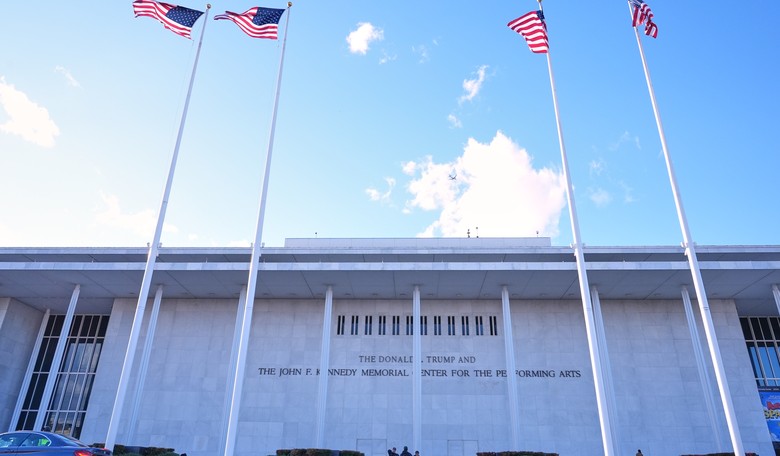
President Donald Trump's decision to close the John F. Kennedy Center for the Performing Arts for repairs addresses real problems with the building and creates space for needed upgrades. The move reflects practical concerns about public safety and the condition of a major national landmark rather than any rejection of its cultural role.
The Kennedy Center has long needed substantial work. Aging infrastructure, including outdated systems and wear from decades of heavy use, has raised legitimate questions about visitor safety and the facility's ability to host performances reliably. Closing it temporarily allows crews to handle repairs without the risks that come from operating a compromised venue. Public safety must come first at a place that draws large crowds for concerts, plays, and other events. Leaving known issues unaddressed would be irresponsible.
The Kennedy Center Board voted nearly unanimously to close the building immediately for safety reasons and prepare for reconstruction. Renovation cannot begin until the D.C. Circuit rules on the Board’s approved name.
— The White House (@WhiteHouse) September 16, 2026
In the meantime, $17M raised by President Trump has been… pic.twitter.com/TUKpKQxfJ5
Beyond basic fixes, the closure opens the door to modernization. A refreshed Kennedy Center can better support high-quality programming that reflects American excellence and history. Improvements to stages, seating, accessibility, and technical systems will make the experience stronger for audiences and performers alike. National institutions should not lag behind private venues in quality or reliability. Investing in this one strengthens a visible symbol of the country's cultural life.
The idea of associating the center more closely with both John F. Kennedy and Trump has drawn attention. Kennedy's name already defines the institution, a fitting recognition of his presidency and the ideals of public service and the arts that marked his time in office.
🚨 NOW: Donald Trump's team has just ordered a CLOSURE of the Kennedy Center for one week, per court filing, to ensure that the major safety hazards are addressed
— Eric Daugherty (@EricLDaugh) September 17, 2026
The ROOF literally begin COLLAPSING and an activist judge thinks they know better than the guy who's been building… pic.twitter.com/61I7Bf4E38
Adding recognition for Trump would acknowledge the work of restoring and protecting the facility during his administration. Presidents who take concrete steps to maintain and improve national landmarks leave a measurable mark. Naming or dual recognition in this context would simply record that contribution alongside the original dedication.
Critics often frame any change involving the Kennedy Center as an attack on culture or history. That reading misses the practical realities. Buildings deteriorate. Systems fail. Crowds expect safe conditions. Addressing those facts through temporary closure and repairs is standard stewardship, not politics. The same principle applies to other national sites that require periodic major maintenance. Delay only increases costs and risks.
President Trump says the Kennedy Center is "a loser financially," and that the Trump administration should receive recognition if they "raise money to carry it." pic.twitter.com/ijDnloMgec
— CSPAN (@cspan) September 17, 2026
A modernized Kennedy Center can continue presenting a wide range of performances while operating from a stronger foundation. Pro-American arts programming fits naturally within a national performing arts center. It does not require excluding other traditions. It simply means the venue can highlight works and artists that celebrate the country's story and achievements without apology. Improved facilities make that possible on a higher level.
Trump's approach here follows a pattern of focusing on tangible results: Identify a problem with a public asset, take steps to fix it, and leave the place better than before. The temporary inconvenience of a closure is the price of long-term functionality. Visitors and artists will benefit once the work is complete.
Honoring both Kennedy and the president who advanced the restoration keeps the focus on results rather than symbolism alone. Kennedy's legacy remains intact. The physical building gains the attention it has needed. Public safety improves. The stage is set for continued performances in a facility worthy of its national status.
This is straightforward management of a public resource. The Kennedy Center deserves to be safe, updated, and ready for the next generation of audiences. Closing it for repairs moves that goal forward. Recognizing the presidents connected to its founding and its renewal is a reasonable way to mark the effort.