
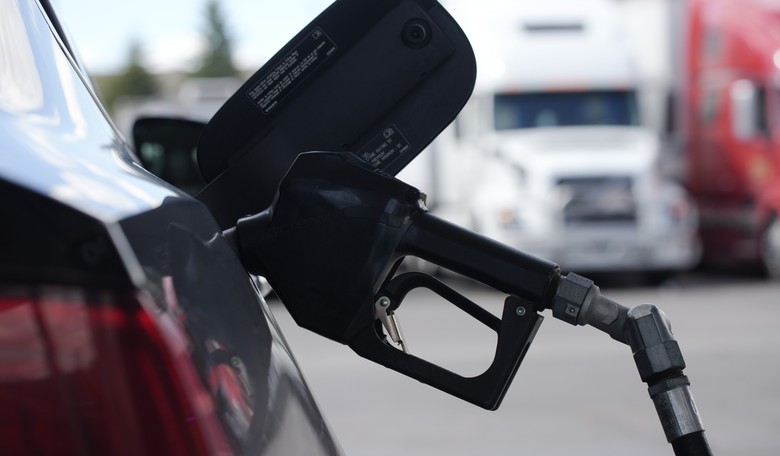
We are less than two months out from the midterm election and the Iran War is still raging on. And with it, higher gas prices for Americans.
Gulf States have called off a meeting to reopen the Strait of Hormuz, a consequential development in the aftermath of drone strikes that have impacted a Saudi pipeline.
Gulf states called off Monday's planned meeting with Iran on reopening the Strait of Hormuz the same day Yemen's Houthis fired dozens of missiles and drones at Saudi Arabia's King Khalid airbase in Khamis Mushait, calling it retaliation for more than 300 Saudi airstrikes on Yemen in five days.
A Friday drone attack Riyadh blamed on Iran-backed fighters in Iraq knocked out Saudi Arabia's East-West pipeline, the kingdom's only route around the blockaded strait. The 7-million-barrel-a-day line feeds the Red Sea port of Yanbu, with traders telling Reuters its closure could cut off up to 4% of global oil supply if it stays down. Yanbu has five to seven days of oil left, unnamed sources told Reuters, and at least four Asian refiners have received no word on loading schedules at a port that normally moves 4 million barrels a day.
As RedState colleague Ward Clark reported on Saturday, Saudi Arabia had to partially shut down the East-West pipeline for repairs after Iranian-backed militias based in Iraq carried out drone strikes on it.
The pipeline can carry up to 7 million barrels of crude oil a day from the Persian Gulf to the port of Yanbu on the Red Sea.
In an update on Monday, the Saudi pipeline will be mostly offline for weeks following the drone strikes.
A crucial Saudi oil pipeline that was struck in an attack last week will mostly be out of service for weeks as the damage is repaired, two regional officials told The Associated Press on Monday, as Yemen’s Houthi rebels seized more islands dominating key Red Sea shipping routes in new blows to Saudi Arabia’s oil exports.
The developments further strain Saudi Arabia’s effort to get its oil to market while avoiding the Strait of Hormuz, the choke point at the mouth of the Persian Gulf where Iranian attacks have stifled shipping. The kingdom relies on the East-West Pipeline, which runs the breadth of the country, to move its crude production from Gulf ports to ports on its western, Red Sea coast. From there it can be put on tankers for export.
An attack that Saudi Arabia blamed on drones from Iranian-backed militias in Iraq forced the shutdown of the 1,200-kilometer (745-mile) pipeline pipeline on Thursday.
This comes amid a surge in oil prices: West Texas Intermediate was trading at $104, up over 4 percent; Brent was trading at $109, also up over 4 percent. Gasoline was up nearly 4 percent, but this tends to lag oil prices.
The worst-case scenario is that the drone strikes continue to take the pipeline offline, while the Red Sea workaround is blocked by Houthi attacks.
The oil transshipment slowdown could add anywhere from 10 cents to 25 cents at the pump, which could play a role in supply chain costs and public perception of the economy ahead of the election.
The Iranians apparently want to impose as much as economic pressure on Americans as possible ahead of the elections in order to coax Donald Trump to back off the military strikes.
Whether the Republican Party likes it or not, the upcoming election in some ways is shaping up to be a referendum on how much the American people really support the ongoing war in Iran.