
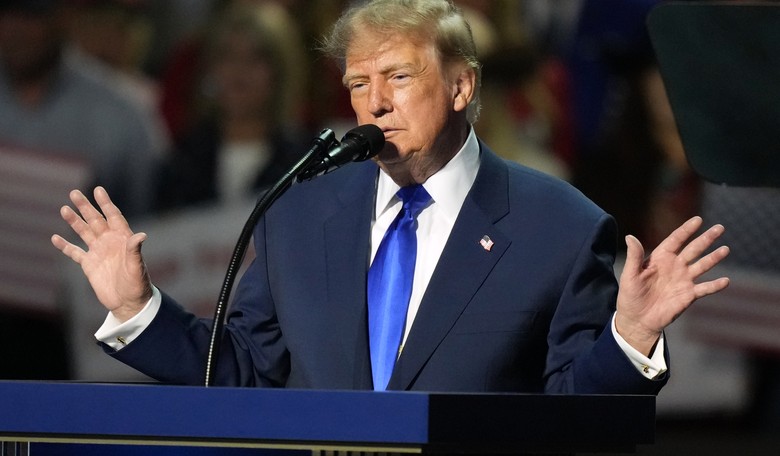
President Donald Trump electrified the Republican midterm convention in Dallas Wednesday night with a promise likely to get the attention of millions of Americans: Keep Republicans in control of Congress, and adult U.S. citizens could receive a $5,000 “Trump Dividend.”
“If the Republicans win, you win with us and you get $5,000,” Trump told the crowd. “It will be called the Trump dividend, congratulations.”
.@POTUS announces the TRUMP DIVIDEND: If Republicans win both the House and the Senate, because of our tremendous economic success, I will issue a dividend to every adult citizen in the United States for $5,000 pic.twitter.com/s4orJJGx9d
— Rapid Response 47 (@RapidResponse47) September 10, 2026
Trump said the proposed payment would go to every adult U.S. citizen, with one major condition attached to the money: It would have to be spent in the United States.
“Because of our tremendous strength and success economically, I will issue a dividend to every adult citizen in the United States of America for $5,000,” Trump said, comparing the idea to a successful company distributing cash to its shareholders.
So how would Americans actually get the $5,000? That part remains unclear.
Trump did not lay out a detailed funding mechanism or timetable Wednesday night, and the White House has not yet released a full proposal. More importantly, the president cannot simply order more than $1 trillion in federal money sent to Americans on his own. Congress would have to authorize the spending.
Vice President JD Vance subsequently indicated that the eventual plan could differ somewhat from Trump's broad announcement, suggesting wealthy Americans might be excluded and that tariff revenue could help pay for the checks.
Estimates of the total cost vary depending on eligibility, but distributing $5,000 across the country's adult citizen population would put the price tag well above $1 trillion.
Marc Goldwein, senior policy director at the Committee for a Responsible Federal Budget, argued that the government does not have the kind of surplus normally associated with a dividend.
“The idea that we’ve had fiscal success is backwards and bordering on laughable,” Goldwein said. “We don’t have surpluses to give away.”
The proposal immediately lit up social media. Former presidential candidate Andrew Yang, who made a universal basic income proposal a centerpiece of his 2020 campaign, welcomed the concept.
“I’ve always liked dividends to the American people,” Yang wrote.
I’ve always liked dividends to the American people.
— Andrew Yang🧢⬆️🇺🇸 (@AndrewYang) September 10, 2026
Tech entrepreneur Jason Calacanis was considerably more skeptical, asking whether conditioning such an enormous federal benefit on Republican control of Congress was legal and joking: “For only $1.6T and you too can buy the election!”
But promising a broadly available government benefit as part of an election campaign is different from paying individual voters in exchange for their votes.
New Mexico attorney John Day said the proposal would not amount to illegal vote-buying because eligibility for the payment would not depend on how any particular citizen voted.
“This is a campaign promise,” Day said. “It’s not a payment to individuals to try to get them to vote in a particular way.”
For now, the $5,000 remains just that — a campaign proposal. There is no application to fill out, no check scheduled to arrive and no final eligibility formula.
Under Trump's announcement, the first step is political: Republicans must retain both the House and Senate in November. Congress would then need to turn the proposal into law and provide the money before any “Trump Dividend” could reach Americans.