
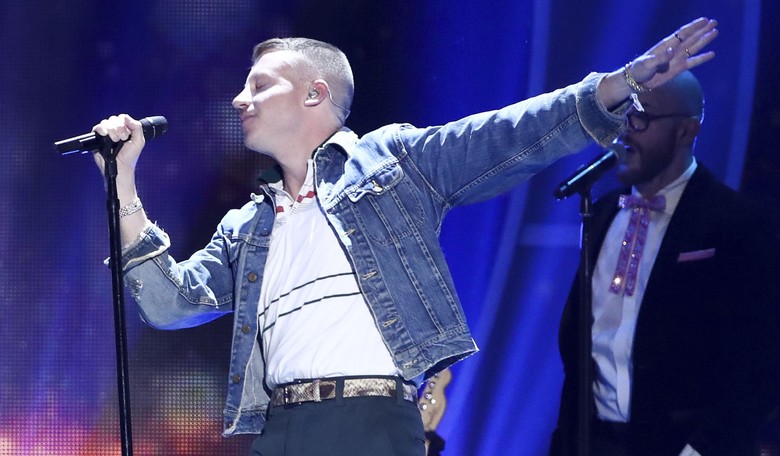
Macklemore opened for Ed Sheeran at MetLife Stadium last Friday and used the platform for more than music. Wearing a keffiyeh, he told the crowd of more than 80,000 that he wanted people in Gaza and the West Bank to know they had not been forgotten. He led chants of “Free Palestine,” performed his song “Hind’s Hall,” and put Gaza footage and political images on the big screens. He tied the message to his own daughter and then expanded it to free America, Cuba, the Congo, Sudan, Iran, and people living in fear of ICE.
The Israeli-American Council responded with a petition asking Sheeran and tour organizers to remove Macklemore from the remaining dates. The group said the night was an Ed Sheeran concert, not a rally or activist event. Freedom of expression does not erase responsibility for how a global stage is used. Jewish patrons, the petition argued, should not have to sit through one-sided messaging presented as settled fact.
Macklemore has the right to hold strong views. That is not the issue. The question is whether an opening act should turn a mainstream pop show into a vehicle for selective politics. Concertgoers bought tickets for music. Many did not sign up for a lecture that frames the conflict in Gaza without the full context of Hamas’s October 7 attack, the hostages held, or the repeated rejection of peace offers by Palestinian leadership. Presenting disputed claims and emotional footage to a captive audience of that size crosses a line from personal belief into imposed agenda.
🛑Jewish and Israeli families bought tickets to see Ed Sheeran not to be ambushed by anti-Israel propaganda.
— Iris (@streetwize) September 5, 2026
Instead, rapper Macklemore walked onstage in a keffiyeh, shouted “Free Palestine,” accused Israel of “genocide,” and turned a mainstream concert into a political rally… pic.twitter.com/fQ8olQSBoU
This is not Macklemore’s first brush with Jewish controversy. In 2014, he appeared on stage in Seattle wearing a black wig, fake beard, and large prosthetic nose. Critics, including actor Seth Rogen, said the look matched longstanding antisemitic caricatures. Macklemore insisted it was a random disguise so he could move unnoticed and surprise the crowd. He called the nose a “witch nose” and said a Jewish stereotype never crossed his mind. He later offered an apology for any offense while maintaining the choice was unintentional. The images and the reaction remain part of the public record.
Macklemore is just an Anti-Zionist https://t.co/v9Rh8oBco3 pic.twitter.com/VkSV312NZl
— Jake Donnelly (@RedWhiteBlueJew) September 5, 2026
That earlier episode matters because patterns of tone-deafness or disregard erode trust. When the same artist now uses a major stadium stage to advance a one-sided narrative about Israel and the Palestinians, the earlier costume controversy resurfaces as more than ancient history. It suggests a recurring willingness to prioritize personal messaging over the comfort and expectations of a broad audience that includes Jewish fans.
Ed Sheeran’s Loop Tour is built on music that reaches across differences. Allowing an opener to inject heavy political content without clear boundaries risks turning every date into a proxy battle. Tour organizers and venues have every right to set rules about what belongs on the stage. Music should remain the focus. Political activism belongs in the proper forums, not as an unexpected overlay on a night people paid to escape ordinary tensions.
.@edsheeran I brought my wife and two daughters to MetLife Friday because we are huge fans of yours. We arrived early, I spent $180 on two sweatshirts for them, watched the first two opening acts and were having a great time.
— Josh Wein (@jmwein) September 6, 2026
Then Macklemore decided to turn your concert into his…
Macklemore can continue speaking his mind in interviews, on his own platforms, or at events designed for protest. Using someone else’s concert as the megaphone is a different matter. The petition is a reasonable request for accountability and clarity. Concerts work best when they deliver what was advertised. In this case, that was music, not a one-sided political appeal.