
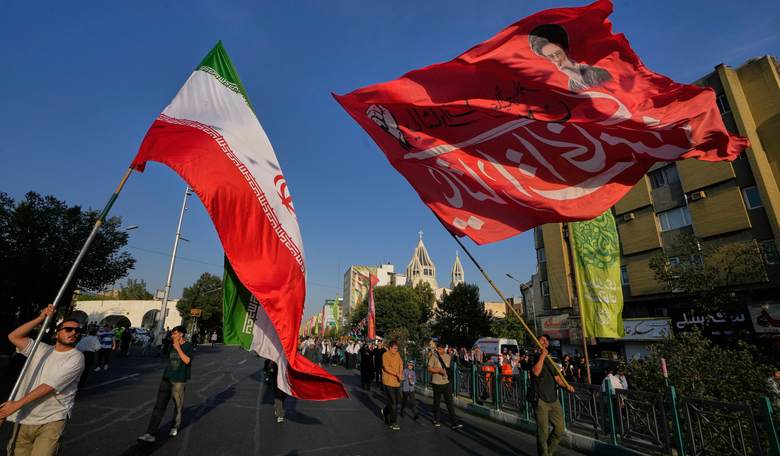
What the United States and (initially) Israel have been doing to Iran has nothing to do with nation-building. What's been going on has been nation-wrecking, and yes, Iran is pretty wrecked, both militarily and economically. But any long-term change, any reviving of Iran, any re-entry of Iran into the civilized world, will have to come at the hands of the Iranian people themselves.
On Tuesday night, President Trump, with uncharacteristic subtlety, suggested once again that the Iranian people get after it. One good point: They may never have a better opportunity.
President Donald Trump revived speculation over regime change in Iran Tuesday night, openly asking when Iranians would "rise up and fight" as his administration intensified military and economic pressure on a government US officials say is increasingly vulnerable.
"I'm not trying to force Iran to the bargaining table," Trump wrote on Truth Social Tuesday. "I like our position now much better, with almost total control of the Hormuz Strait, and their economy totally collapsing."
"They are just playing out the inevitable," Trump added. "When are the Iranian people going to rise up and fight?"
— Rapid Response 47 (@RapidResponse47) September 2, 2026
The president writes:
I’m not trying to force Iran to the bargaining table, as ABC Fake News reported. I couldn’t care less if they sign a worthless, to them, agreement. I like our position now much better, with almost total control of the Hormuz Strait, and their economy totally collapsing. They are just playing out the inevitable. When are the Iranian people going to rise up and fight? President DJT
The United States can't overthrow what's left of the Iranian regime with air and naval power alone. The only way that can happen is for there to be people on the ground forcing the issue, and let's face it, those people are not going to be U.S. Army or Marines. They will be the Iranian people, the same people who have courageously risen up before. The only way out for them is through, and yes, it will be costly. People will lose homes, property, family members, and lives.
The regime is showing signs of coming apart, and it may be the economic measures that are hurting more than the military strikes.
Treasury Secretary Scott Bessent described Iran as being in a "death spiral" during remarks Monday, arguing that economic pressure was rapidly narrowing the government's options.
"They are panicked. They are resorting to kinetic because they are getting squeezed economically," Bessent told Ed Lawrence on Fox Business.
Bessent said Iran could eventually face one of three outcomes: "Either the IRGC are going to turn on each other, the people are going to turn on them, or they are going to come to the table and want to do a deal that they can stick with."
Here's the thing: The "deal that they can stick with" seems more and more unlikely by the day. Iran has never been forthcoming in what talks have taken place thus far. Iran's leadership is fragmented, more so as the regime looks to be coming apart at the seams. Any deal they make, they will break. Any promise they make won't be worth the paper it's printed on. The only viable long-term options for Iran are for the Iranian people to turn on the regime. That's going to hurt, in large part because the Iranian people have no arms. It's going to hurt because the Iranian regime has never hesitated to shoot or to hang dissidents and protesters.
But this is the only long-term solution. The regime is populated by liars and terrorists. There can be no deal made with such people.
What the United States can do is to make sure the Iranian people, if they do rise, do so under a steel umbrella provided by the United States Air Force and Navy. That, we can do. But in the end, the United States cannot force a regime change and should not try. We can, however, support an organic effort by the Iranian people, who of all the people in the world, may well have suffered the most from these monsters.