
Picture this: Four astronauts from India, Poland, Hungary, and the United States stand prepped and ready, a gleaming SpaceX Falcon 9 behind them. They’ve trained, endured quarantine, and dreamed of the stars. They’re not going to Mars or the Moon—just to the good ol’ International Space Station. Only one problem: The mission is grounded. Not by weather, not by politics, but by a leaky Russian module older than most of the crew.
That’s right—decades into the 21st century, our astronauts are being benched by aging Soviet-era plumbing in space.
Update!
— Nura Future Feed (@NuraFutureFeed) June 21, 2025
NASA, Axiom Space, and SpaceX are standing down from launching Axiom Space’s Axiom Mission 4 (Ax-4) on Sunday, June 22 from Launch Complex 39A at NASA's Kennedy Space Center in Florida. A new launch date will be shared once available. #trend #spacex pic.twitter.com/EnLDuazRhh
The Ax-4 mission, a collaboration between NASA, SpaceX, Axiom Space, and several international partners, was set to make history. For the first time, Poland, Hungary, and India would each have a self-funded astronaut aboard the ISS. It should have been a triumphant launch of global cooperation, commercial innovation, and American-led leadership in space. Instead, it’s become a sobering reality check.
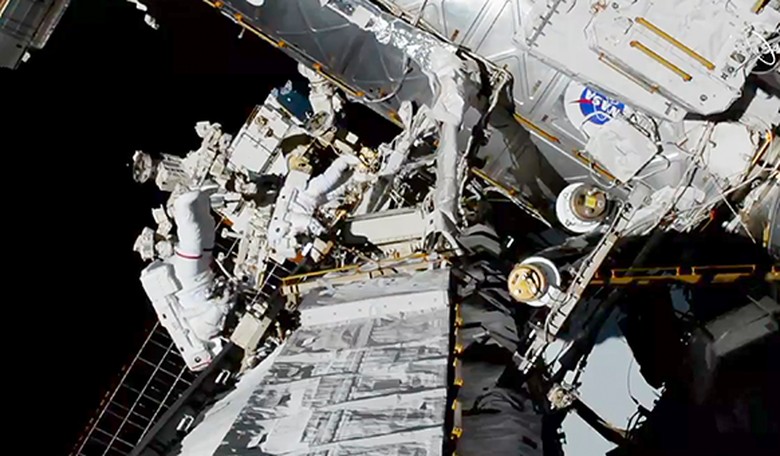
NASA scrubbed the launch indefinitely. First, there was a leak in a Falcon 9 rocket's liquid-oxygen system—easily fixable. But the bigger issue? The persistent air leak in the Zvezda module on the ISS. This Russian-built relic has been limping along for years, patched up like a space-age tire with duct tape and crossed fingers. Now, the risk to visiting astronauts has become too big to ignore.
For the sixth time in less than a month, the Axiom-4 (Ax-4) mission to the International Space Station (ISS) with group captain Shubhanshu Shukla on board has been put on hold.
— Hindustan Times (@htTweets) June 21, 2025
More details ▶️ https://t.co/UaazsXYm1f pic.twitter.com/LVywNbMXNv
Let’s be real: This isn’t just a technical hiccup. It’s a fundamental failure in leadership and vision. We’re launching billion-dollar missions from the world’s most advanced launch pads, only to dock them to a space station that sounds like it belongs in a scrapyard. Imagine building a Tesla and parking it in a leaky garage with exposed wires and rotting floorboards. That’s what we’re doing with our space program.
And it raises a serious question: Why is NASA still relying on ancient Russian hardware? Better yet—why hasn’t Washington funded a real replacement?
🧑🚀 Ax‑4 crew remains in quarantine at Kennedy Space Center, undergoing final health checks and mission prep. With the launch delayed, they’re ready and waiting—clearance now depends on ISS safety status. #Ax4 #SpaceX #NASA #ISS pic.twitter.com/hMtfTPSEnH
— Expanse Journal (@expanse_journal) June 20, 2025
The answer is the same tired story we’ve seen for years: bloated bureaucracy, political gamesmanship, and a lack of bold commitment. NASA talks endlessly about diversity, equity, and inclusion—fine. But maybe we should also include things like “functioning air seals” and “non-lethal environments” in our list of priorities.
RELATED: Essex Files: Why Elon Musk’s SpaceX Launch Is a Metaphor for American Grit
Essex Files: Soviet Relic Crashes After 50 Years - Kosmos 482’s Fiery End in the Indian Ocean
Meanwhile, companies like SpaceX and Axiom are trying to move the ball forward. They're leading the charge in making low-Earth orbit not just a government-owned platform, but a commercially viable frontier. They're building space stations, testing new life support systems, and making reusable rockets a routine. But even Elon Musk can’t innovate his way past a busted 1990s airlock.
This launch delay should be a wake-up call. America’s space leadership can’t afford to be tied to obsolete relics. If we want to keep leading, we need a bold plan to move past the ISS—past patch jobs, past dependency—and toward a new era of space development. Axiom’s plans for private space stations are a start. But NASA needs to stop dragging its boots and start leading the mission again.
Let’s give our astronauts, and our international partners, a future worth risking everything for—not one that relies on the good graces of aging hardware that should’ve been decommissioned a decade ago. We can do better than this. In fact, we *must*.
Because if we’re going to explore the stars, we can’t keep tripping over broken pipes on the way out the door.