
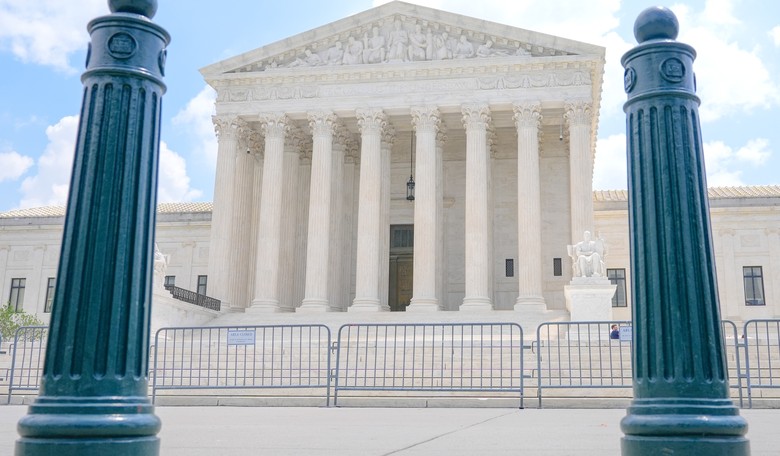
We have all seen them. Those "man-on-the-street" interviews where Americans are asked if they know their congressmen or senators, or the three branches of government, and all they can muster is a deer-in-the-headlights stare. Like everything else in education, civics is sorely lacking. But as we celebrate 250 years of America, how will future generations keep the freedoms and liberty America was founded on alive? Justices from the nation's highest court have some ideas.
GORSUCH, KAVANAUGH, BARRETT: Justices Say Civics Education Is What Keeps Founding Freedoms Alive as America Turns 250 https://t.co/a8RnBT85u9 https://t.co/dIkYQCh3fC
— Next News Network (@nextnews) November 11, 2026
In interviews filmed by the Federalist Society for their upcoming National Lawyers Convention and the theme of "250 Years of American Exceptionalism," conservative Justices Neil Gorsuch, Brett Kavanaugh, and Amy Coney Barrett each took a turn speaking on what they think is the best way for future generations to preserve America's freedoms and liberty.
Justice Gorsuch talked about the divine origins and nature of our rights, saying:
"I think it's very easy to take the rights granted in our Constitution and the ideals expressed in the Declaration for granted. They are, for us, a little bit like the air we breathe and the water a fish might swim in. They seem natural to us, but they weren't in 1776. The ideas in the Declaration of Independence that all of us are created equal, that every one of us has God-given rights — they don't come from government, they come from God."
Justice Kavanaugh stressed education and the teaching of American history and values, and also civics and participating in the process of government.
"I think our education system is absolutely fundamental to ensuring that in the next 250 years, we preserve this republic and improve upon this republic. So, teaching American history, teaching the values of this country, the history of this country...And I think all of us should be constantly striving to ensure civics education, not only for our youth, but for all of us, and that we constantly are learning and participating in our system of government."
The overwhelming majority of people In America won’t pass a civics test. This is I don’t care for how things like Medicaid for all polls, consumer sentiment index on the economy. Most Americans have no clue what going on and rely on influencers and the news to tell them what to believe.
— Shiestynurse (@shiestynurse) November 9, 2026
Justice Amy Coney Barrett focused on the last line of the Declaration of Independence,
"We're not passive observers in the American project. We're participants in it. It is our project. I might suggest that people look at the last line of the Declaration of Independence. It ends with a mutual pledge in which the signatories to the document mutually pledge their lives, their fortunes and their sacred honor to the success of the American project. And they made good on that promise..."
Most rational Americans would agree with these statements. However, rationality is not what is happening in America's public schools and museums. Historical concepts like the 1619 Project have taken hold, with the Founding Fathers portrayed as merely slave holders, with no other mention of their contributions to the birth of the nation. And as far as civics education goes, it doesn't get much better. A study released in 2023 showed that just 22 percent of eighth graders scored at or above the proficient level in civics, and less than half were taking a class primarily focused on civics. It paints a pretty clear picture of why more and more American young people are drawn to socialism and communism. They have not been taught what it truly is.
If the recent midterm election results have taught us anything, it's that American students who don't know American history and civics become America's voters.
FIRST ON FOX: As America celebrates 250 years of independence, three conservative Supreme Court justices reflect on what makes the nation exceptional and the importance of preserving its founding freedoms for future generations. Justices Brett Kavanaugh, Neil Gorsuch and Amy Coney Barrett share their perspectives on love of country and the principles that have shaped the nation for generations. See their full remarks on what it will take to preserve American exceptionalism and the nation’s freedoms for future generations: https://t.co/BQ3xzoheXV
— Fox News (@FoxNews) November 11, 2026