
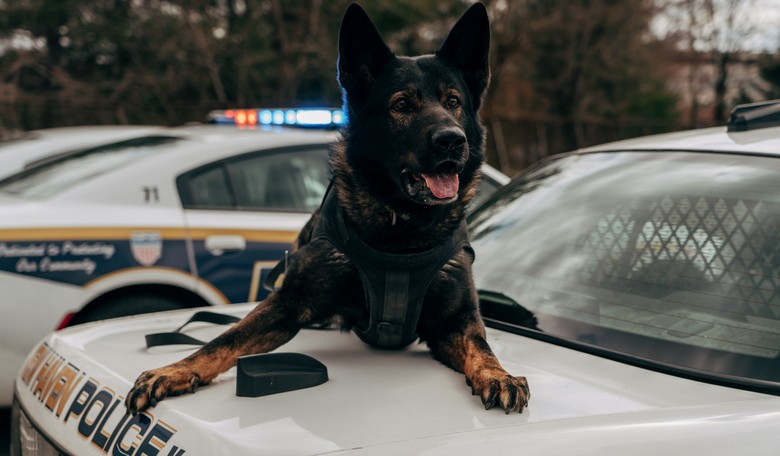
There's a reason we call dogs Man's Best Friend. They aren't just our companions, they are our protectors. They work with us, hunt with us, play with us, and watch out for us. It's one of the great success stories of human domestication of animals, wherein both species see benefit.
The other example would be cats, but there it's still not clear precisely who domesticated who.
To meet all of humanity's preferences and needs for our canine companions, humans have produced an amazing variety of breeds, from mastiffs to chihuahuas. But now, a Texas startup proposes to take this to the next level, producing gene-engineered wonder dogs.
A Texas-based start-up promising to give the US an edge on the battlefield by rebuilding the country’s supply of “military working dogs” has raised $200mn from investors including Sequoia Capital and Cathie Wood’s Ark Invest.
Warhound, the brainchild of Anduril’s co-founder Palmer Luckey and software entrepreneur Ben Lamm, “will produce genetically enhanced working dogs” domestically and equip them with advanced technology to ensure they have “battlefield situational awareness”, the new company said.
This seems a rather unsettling idea for dog lovers. But the startup is well-funded, even if their goals are on the fuzzy side.
Warhound was valued at $1.2bn in its funding round, including the new investment, said a person with knowledge of the deal.
Lamm, who conceived of the plan with Luckey 18 months ago, described it as a “Captain America programme for dogs [which] also solves a real problem in the welfare of these animals”.
Which problems, one is compelled to ask? Military working dogs lead dangerous lives, even more so than the combat soldiers they work with. They are employed for a variety of reasons, and in extremis, are expected to take a bullet that may otherwise have hit a person. That's a sad event, but that's the job. But how can this company gene-engineer a better war dog?
We might note that Ben Lamm is also the founder of Colossal Biosciences, which claims to have "de-extincted" the dire wolf (they didn't) and also claims to be "de-extincting" other extinct animals, like woolly mammoths (they aren't.) Colossal is tinkering around the edges with these animals, and it's hard to see any more than that coming out of this Warhound organization.
Here's what they claim to be doing:
“Our idea is: take the top dogs, biobank them and clone them . . . in addition to cloning the dogs, could you edit them and improve longevity and performance. That’s more healthy for the dog, the firefighter, cop or warfighter,” said Lamm, who will serve on the company’s board.
Cloning is one thing, and among mammals, attempts to clone dogs are pretty successful compared to other mammals, with success rates around 20 percent, as opposed to 1 to 5 percent for mice and 5 to 20 percent for cattle. If it's preserving the personalities and physical abilities of the best working dogs that is the goal, it would seem much easier and more profitable to retire these dogs a year or two early and breed them, preserving their traits the traditional way.
Here's the thing: This startup probably won't amount to much. The technology involved may be cutting-edge, but it's also expensive. Any such dogs would be far too valuable, in the terms of money invested in their creation, to ever send into the field.
No, I suspect this startup will be very similar to Colossal Biosciences: More showroom than science.