
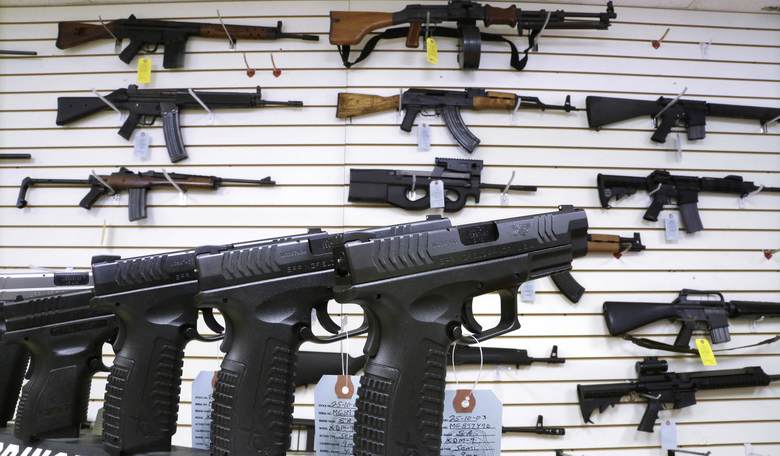
The 1934 National Firearms Act (NFA) placed heavy regulations on several categories of weapons, including a tax of $200 on the transfer of ownership of several categories of firearms and accessories, including suppressors, fully automatic weapons, short-barreled rifles (SBRs), and short-barreled shotguns (SBSs). Early on in President Trump's second term, Congress removed the transfer tax for all but the fully automatic weapons, which would appear to render the restrictions under the NFA moot.
In August, a federal judge, in Silencer Shop Foundation et al. v. Bureau of Alcohol, Tobacco, Firearms and Explosives et al. (2026), found that, indeed, the lifting of the tax requirement has rendered the NFA unconstitutional for the items for which the tax was removed: Suppressors, SBRs, and SBSs. Now, in what would appear to slam the door on the case, President Trump has ordered the Department of Justice to refrain from appealing the decision.
Here’s a piece of good news that doesn’t come along often. President Trump has ordered the Justice Department to stand down and let a federal court ruling loosening restrictions on suppressors and short-barreled firearms take effect. That’s according to CBS News reporting from Sarah N. Lynch and Jennifer Jacobs, citing multiple sources familiar with the matter.
The decision is Silencer Shop Foundation v. ATF, handed down August 5 by U.S. District Judge James Wesley Hendrix in the Northern District of Texas. It affects the three categories of firearms the government has long labeled “gangster weapons”: short-barreled rifles, short-barreled shotguns, and silencers.
Hendrix’s reasoning was as clean as it gets. The National Firearms Act was upheld back in 1937 in Sonzinsky v. United States as an exercise of Congress’s taxing power. Last year’s One Big Beautiful Bill Act zeroed out the $200 NFA tax stamp on suppressors, SBRs, and SBSs. “Because today’s NFA does not generate any revenue from untaxed firearms,” Hendrix wrote, “its regulatory provisions cannot be upheld under the taxing power.” No tax, no NFA. That’s the whole legal theory the Silencer Shop Foundation and its co-plaintiffs — GOA, Palmetto State Armory, SilencerCo, B&T, and Gun Owners Foundation — have been pushing since they filed on the same day Trump signed the OBBBA.
That was a pretty clever back-door means of enforcing the Second Amendment on what sure looks like an unconstitutional law — and which now has been decided to be just that, after the lifting of the tax.
There's a catch, though. (There's always a catch.)
One important caveat: the way Hendrix’s order was written, the relief currently applies only to members of the plaintiff organizations — current and future GOA members, plus PSA and SilencerCo customers. If you’re not covered by one of those, you’re still working under the old NFA rules for now, even as the underlying regulatory basis has collapsed for everyone else.
In Alaska, as well as several other states, we are still working under those old NFA rules; we'll have to see what can be done about that.
Honestly, the logic behind the 1934 National Firearms Act was always a bit of a puzzler. The initial intent, when the law was first in debate in Congress, was to regulate handguns — any handguns — in the same way as fully automatic weapons and short-barreled weapons, but that provision was dropped. Short-barreled weapons, though, were regulated due to concealability, at least in part, while being far less concealable than a handgun. And as for suppressors, most people derive what knowledge they have of those devices from bad movies and television, where someone screws a tiny flash hider onto a handgun and fires it with a quiet puff. That's not how they work at all; suppressors may save some of the shooter's hearing, but any centerfire weapon so equipped still makes a substantial bang.
For now, though, we can celebrate this win for American shooters and the Second Amendment.
The legacy media isn't happy about the decision, but speaking personally, they'll just have to deal with it.