
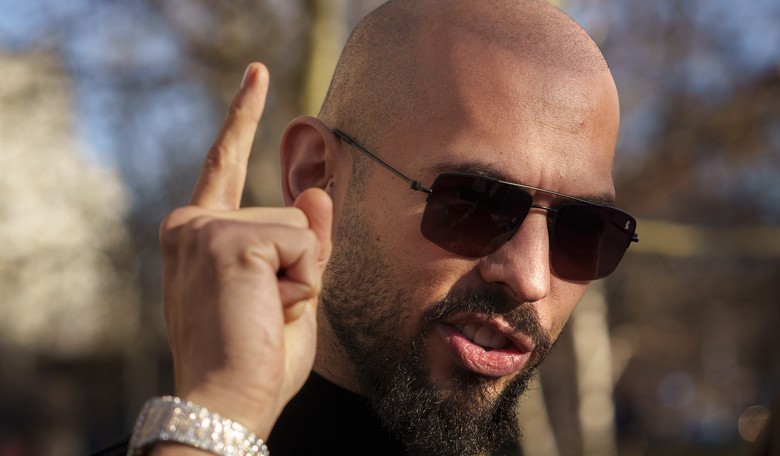
Romania’s court has ordered Andrew Tate and his brother Tristan to stand trial on charges of human trafficking, rape, and forming a criminal group. Prosecutors allege the pair used the “loverboy” method: building romantic relationships with young women, then coercing them into producing pornography for profit. Seven women are listed as victims in the case that has dragged on for years. Both brothers deny the charges and claim the process is politically motivated.
Whatever the final verdict, the public record already shows a pattern worth examining. The Tates built a large following by selling a version of manhood centered on dominance, control, and the open treatment of women as commodities. Their online content repeatedly framed relationships as power contests and taught young men that respect was weakness. That message was never a serious guide to adult life. It was performance marketed as philosophy.
Andrew Tate is indicted for trafficking minors and sex with a minor: Prosecutors say he recruited UK girl, 15, and made nearly £1m from her 'webcam activity' https://t.co/f0EUloxvrs
— Paula McEneaney (@paula_mceneaney) September 4, 2026
True strength does not require demeaning others. It shows in self-control, reliability, and the ability to build rather than exploit. Men who treat women with basic respect and kindness are not soft. They are competent. They form stable relationships, raise children who trust them, and contribute to communities that function. The opposite approach produces short-term attention and long-term damage, both to the people involved and to the culture that absorbs the message.
The Tate brothers projected a hyper-masculine image that many of their admirers mistook for substance. The look, the cars, the constant talk of conquest created an illusion of power. Strip away the branding and what remains is a thin, cartoon version of manhood: loud, self-absorbed, and dependent on the compliance of others. Young men who copy that model learn the wrong lessons about status, sex and success. They learn to measure themselves by conquest rather than character.
took long enough
— Amicus Curiae (@AmicusCuri99068) September 4, 2026
Romanian prosecutors has officially indicted manosphere influencer Andrew Tate for trafficking minors, among other charges, alongside his brother Tristan.
On Friday, local time, Andrew Tate was indicted on charges of trafficking minors, money laundering, sex…
A healthy culture does not need to apologize for male ambition or physical strength. It does need to reject the idea that those traits justify treating women as disposable. Respect is not a left-wing slogan. It is a practical requirement for any society that wants families to hold together and trust to exist between the sexes. Kindness in this context is not sentimentality. It is the refusal to use people as means to an end.
The Romanian case will be decided by evidence presented in court. Outside the courtroom, the broader point is already clear. Public figures who monetize contempt for women give permission for that contempt to spread. The audience for that content is often young and impressionable. When the product being sold is a hollow performance of dominance, the cost shows up later in broken relationships, damaged trust, and a generation of men who never learned the difference between confidence and cruelty.
Lindsay Clancey supporters ARE akin to Andrew Tate supporters, you're right. And both Clancey and Tate should rot in jail. Glad we all agree.
— Hugh (@huglifeish) September 4, 2026
The trial will test specific criminal allegations. The cultural test is whether young men continue to buy the act or recognize it for what it is: a short-term hustle that leaves both the seller and the buyer diminished. Men who want durable strength will look elsewhere. They will look for models who treat women as equals in dignity, not as props in a personal brand. That standard is neither radical nor complicated. It is simply the baseline for adult behavior.