
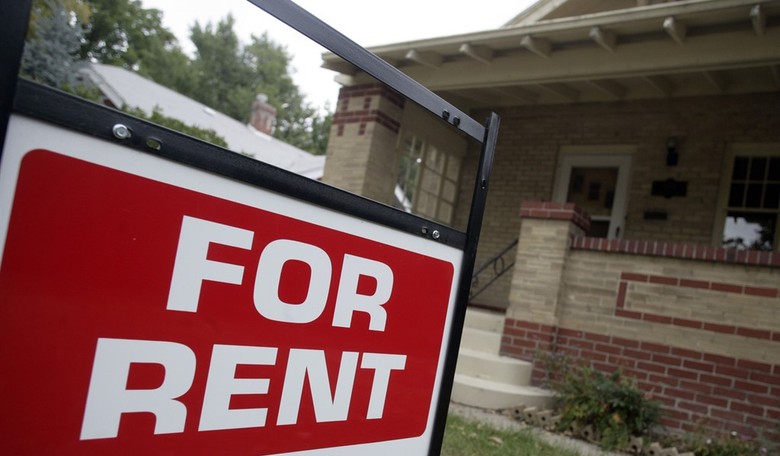
The housing market has been in chaos for the past several years. Since the pandemic, the American real estate sector has yet to re-stabilize, leaving many unable to get on the property ladder and forcing them to rent longer than expected. That, in turn, has driven up the cost of rental properties. Good news may be on the horizon, though, as steps are being taken to correct market interference that has been artificially inflating rental costs. A prime example of such interference has been real-estate goliath Zillow, which was working to eliminate competition, direct buyers to certain agents, and influence the algorithm to raise home prices. Fortunately for renters, the Federal Trade Commission has taken steps to restore free-market competition — a vital first step to either slowing the increase in rents or, theoretically, reducing them.
Last year, Zillow paid competitor Redfin $100 million to stay out of the rental ad market for nine years, although it could continue to repost Zillow’s own apartment listings. The Federal Trade Commission, joined by five states, stepped in last September with a lawsuit alleging “Zillow and Redfin entered into an illegal agreement to dismantle Redfin as a competitor in the ILS advertising market for multifamily rental properties.” In the complaint, the FTC stated:
Defendants’ unlawful agreement—under which Zillow pays Redfin at least $100 million to stop competing, exit, and stay out of the ILS advertising market—violates Section 1 of the Sherman Act. The agreement is not ancillary to any actual partnership or joint venture between these direct competitors. This agreement to eliminate competition is obviously anticompetitive. It will result in reduced choice, higher prices, and reduced quality for multifamily rental advertising customers and will provide no cognizable procompetitive benefits.
By having Zillow bar Redfin from the market, advertising costs would be artificially raised. If those prices were high, landlords would almost certainly seek higher rents. As the complaint alleged, "a hypothetical monopolist of ILS advertising could profitably impose a small but significant non-transitory increase in price or worsening of terms.”
This was resolved on August 24, with FTC banking a big win for renters. The FTC notched an agreement that Redfin would reenter the market “with far more apartment listings and to make enforceable commitments to invest millions of dollars to ensure Redfin will be a far stronger competitor than it was before the 2025 agreement.” Ad costs should come down. That would in turn create downward pressure on either the rate of inflation affecting rents, or the rents themselves.
“This kind of payment to a competitor to exit a market and stop competing violates the antitrust laws,” said Daniel Guarnera, Director of the FTC’s Bureau of Competition. “This settlement delivers better, quicker, more certain results for both renters and property management companies than we would have been able to achieve after prevailing at trial, including firm and enforceable commitments by Redfin to relaunch its rentals advertising business.”
This is especially important now, as home prices are so high that more Americans are staying in the rental market. “Housing affordability remains strained,” said John Sim, Head of Securitized Products Research at J.P. Morgan. "The cost-to-income ratio for buying a home sits at 35%, and buying is cheaper than renting in only around 2% of metropolitan statistical areas.”
Along with the pandemic came remote work and rock-bottom interest rates, which exacerbated the housing shortage that already existed. Now, pandemic-era buyers are refusing to leave those homes and exchange their mortgage rate for one somewhere around six percent. This lack of supply is making competition for available homes even more fierce and continuing to drive up prices. The U.S. Treasury reports that inflation-adjusted house prices have risen about 65 percent since 2000. July marked 36 consecutive months in which the median price of a home rose in America, and it is now an all-time high of $440,000. There is a glimmer of a silver lining in this, however, in that the rate of growth is slowing down and inventory is rising.
Legislative fixes are also in the works. The 21st Century Road to Housing Act was the first major piece of legislation regarding affordable housing to make it through Congress in decades — and it did so with overwhelming support. It encourages smaller-dollar mortgages, alleviates bottlenecks in manufactured housing due to compliance burdens tied to Dodd-Frank and the SAFE Mortgage Licensing Act, promotes the formation of new community banks, and sets limits on large institutional investors purchasing single-family homes to promote homeownership opportunities for families rather than corporations.
Now, it has to be implemented so it can provide relief in both the renting and buying sectors. Housing prices this high are unsustainable, and supply needs to catch up with demand. But the FTC forcing concessions from big players like Zillow and Redfin is an important step and shows a focus on the problem of too-high rents. This should help Republicans in November — if voters are made even a little bit aware of it.
Amelia Hamilton is a writer and communications professional from Michigan with more than a decade of experience in messaging to promote liberty. Through her work with different organizations and publications, she knows how to craft the right message for each audience to help them connect with policy issues. Amelia has undergraduate and master’s degrees in both English and 18th-century history from the University of St. Andrews in Scotland