
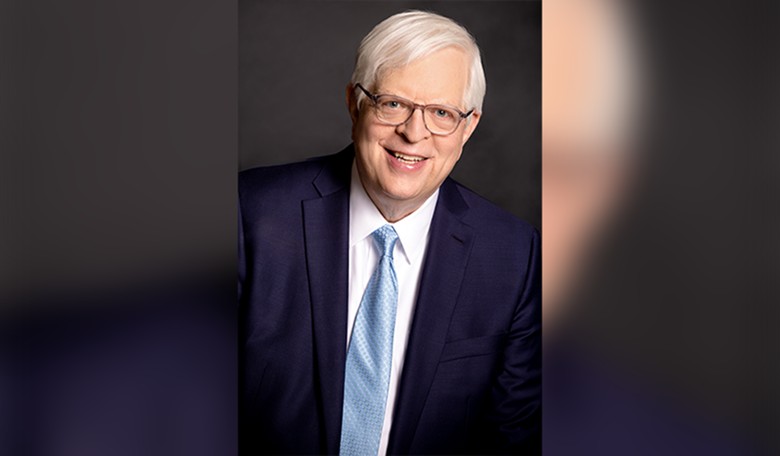
On the morning of November 12, 2024, Dennis Prager stepped out of the shower, slipped, and hit his head on the bathtub. He became paralyzed from the shoulders down. A doctor told his family he should receive palliative care. In other words, they should say their goodbyes.
"He did not know who Sue Prager was," Dennis said of his wife. "That man started with the wrong person."
Dennis began his long road of recovery, including months on a ventilator, a long hospital stay in Atlanta, and round-the-clock nursing care.
Yet his first request was not for sympathy. "Don't feel sorry for me," he said during his October 15 speech in Miami at Trump National. "I beg of you."
This extraordinary statement is the real-life demonstration of an idea Dennis wrote about nearly 30 years ago.
Dennis read passages from his 1998 book, Happiness Is a Serious Problem. The words sounded prophetic coming from a man in a wheelchair:
"Most people wait until tragedy strikes before thinking about how to incorporate tragedy into their life," he read. “And then the shock is often too great to absorb…” Dennis did that thinking in advance. Since his early teens, he said, he has been obsessed with the problem of unjust suffering: the Holocaust, the Gulag, Mao's famines and Cambodia's killing fields, along with plagues, earthquakes, and the deaths of children.
That study nurtured two habits. The first was constant gratitude for the misery he had been spared. The second was a refusal to believe tragedy only strikes someone else. "I am just as likely to be the other guy," he wrote decades ago. Then he added, "And now I am."
Many believers, Dennis noted, lose their faith when God fails to protect them. Dennis never expected that protection. He has always cared more about what God wants of him than what he wants of God.
He doesn't claim to know whether God allowed the fall. Sue was usually downstairs making lunch, but that morning she was upstairs, saw him fall, and saved his life. He doesn't claim to know whether God put her there either. What he does believe is that God is with him.
From that conclusion, he posed the most provocative question of the evening: Is he lucky or unlucky? His answer, characteristically rational, was both. He isn't lucky to be paralyzed. But he is lucky to have no brain damage, to breathe without a ventilator, and to have a family who loves him.
He pointed to his own formula: Unhappiness equals image minus reality. When you can't change your reality, Dennis said, change your image.
Our culture increasingly treats victimhood as a credential. Dennis has as strong a claim to it as anyone, and he rejects it. "You cannot be happy if your primary identity is that of a victim, even if you really are one," he read. His identity, he said, is "Dennis. Not victim."
Does @DennisPrager consider himself a victim after the catastrophic injury that left him paralyzed? During his first in-person speaking appearance since his fall, Dennis explains why happiness is impossible when victimhood becomes your primary identity—even when you have… pic.twitter.com/5f2limbLrA
— Marissa Streit (@marissastreit) October 17, 2026
Truly an amazing evening watching @DennisPrager finally return to the stage! He spoke for nearly an hour, sharing so much wisdom. We look forward to sharing the footage with you @prageru. The best part of the night? Dennis is still Dennis! And he’s planning to give many more public speeches!
— Marissa Streit (@marissastreit) October 16, 2026
He promised this won't be his last speech. He has, he said, a lot to say. We will be listening.
Watch Dennis’s entire speech here.