
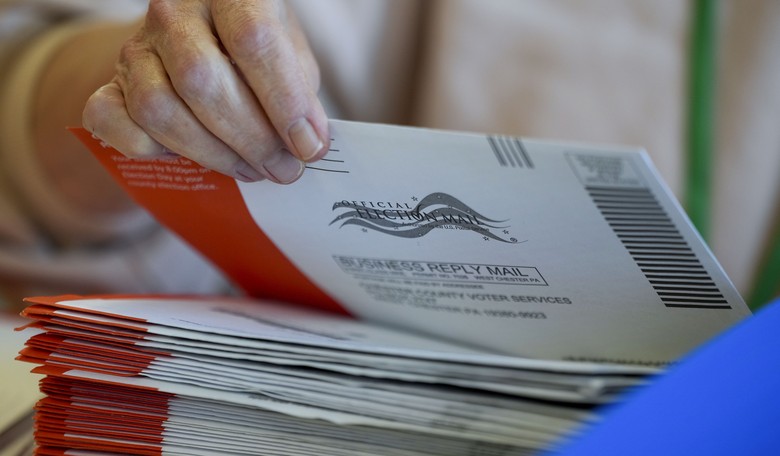
The Department of Justice filed an emergency motion with the 9th Circuit Court of Appeals Friday in its case against the State of California and Los Angeles County related to the potential tabulation of up to 20,000 vote-by-mail ballots it says were mailed to "likely noncitizens" on the state's voter roll.
It's the latest move in a nonstop week of filings and maneuverings that started on October 15, when the DOJ filed suit after state officials ignored its request that mail ballots returned on the list of 20,000 suspected noncitizens be set aside and not tabulated until citizenship could be confirmed. This will be a little tedious, but it's worth reciting the procedural history.
On October 19, US Attorneys for the four California districts announced Operation Protect the Vote, in which 28 permanent legal residents in the state were charged with illegally registering to vote, with many of them also facing charges for actually voting in one or more elections despite not being eligible. The same day, the DOJ filed an emergency motion, asking a federal judge to order state officials to segregate ballots received from people on the list.
As we reported, at the time the emergency motion was filed, there was no judge assigned to the case. On the evening of October 20, Trump-appointed Judge John Holcomb was assigned the case, but by the afternoon of October 21 Judge David Carter, a Clinton appointee who ruled against forcing the state to provide the DOJ its voter rolls back in January, took the case over under "related case" rules.
BREAKING: In a blow for DOJ, the federal judge overseeing the case involving the alleged 20,000 non-citizen voters in California has been switched from Judge John W. Holcomb (Trump appointee) to Judge David Carter (Clinton appointee). This switch will be seen as a win for LA County/California. Judge Carter previously dismissed a DOJ lawsuit against CA last year that accused the state of not following federal laws on proper maintenance of voter rolls. Here's what Judge Carter wrote when dismissing the case to give a flavor of his thinking on the topic: “State run elections mean that voters recognize their neighbors who staff polling stations, trust their Secretaries of State—whom they voted for—to keep their personally identifying information safe, and believe that they will not be targeted because of what they look like or who they vote for. The DOJ’s request for the sensitive information of Californians stands to have a chilling effect on American citizens like political minority groups and working-class immigrants who may consider not registering to vote or skip casting a ballot because they are worried about how their information will be used."
— Bill Melugin (@BillMelugin_) October 21, 2026
Late in the evening of October 21, the DOJ filed a motion asking Carter to rule by noon on Thursday, October 22, citing the ongoing harm and disenfranchisement of U.S. citizens occurring in the absence of any segregation of ballots received from people on the likely noncitizen list that would continue until the October 27 date Carter set for hearing on the temporary restraining order. Carter ignored that request, so on the evening of October 22 the DOJ filed a notice of appeal to the 9th Circuit, characterizing Carter's silence as a constructive denial of its motion.
Then, on Friday morning, October 23, the DOJ filed a motion for an injunction pending its appeal to the 9th Circuit, asking Judge Carter to at least order the state to segregate those ballots until the appeal could be heard at the 9th Circuit. Carter issued orders and memoranda related to the October 27th hearing, but didn't reply to the motion for injunction. By Friday evening, the DOJ filed a request for an injunction at the 9th Circuit instead of at the district court level.
Breaking: Trump admin officially files emergency request to the 9th Circuit in the case of the alleged 20k non-citizen ballots. This is now an effort to bypass CA federal judge David Carter, who did not make a ruling by the DOJ's request noon yesterday. https://t.co/KJZTjgPr93
— Matt Finn (@MattFinnFNC) October 23, 2026
At the same time, the DOJ sent letters to 48 county registrars in the state, giving them 48 hours to "quarantine" the ballots of suspected noncitizens in their counties.