THE 4TH OF JULY IN SAMARRA, IRAQ


Just a Company of American paratroopers, a guitar plugged
into the outpost's PA system, and a whole lot of demolitions.

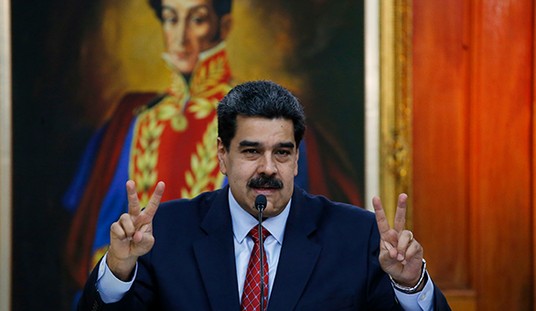
Venezuela

Posted at 10:28am on Jun. 19, 2008 Three cheers for Iraq!

now president bush should declare venezuela state sponsor of terrorism

By AcademicElephant

Two major news items from yesterday may seem unrelated, but both have serious ramifications for the intertwined issues of terrorism and energy. On the one hand, we had the excellent news that western oil companies are preparing to go back into Iraq after 38 years. On the other hand, we had the very very bad news that the Treasury Department has established economic ties between Venezuela and Hezbollah.

Read on to connect the dots...

Posted in | | | | | Comments (2)/ Email this page » / Read More »

Posted at 1:40am on Jun. 13, 2008 The Keystone Kops Show In Venezuela

By Pejman Yousefzadeh

The Economist has the details on Hugo Chavez's attempts at providing political leadership. Once again, we see that Chavez is good for a laugh or a dozen:

HUGO CHÁVEZ has never been one to worry about a little inconsistency. Venezuelans, along with their neighbours, have become accustomed to his habit of switching from firebrand to conciliator and back again, with barely a pause for breath. But even by his own remarkable standards, Venezuela's left-wing president has recently been showing new virtuosity in the art of making surprising U-turns.

In January this year he told a startled world that the FARC guerrillas in neighbouring Colombia should be treated not as terrorists, as they are by most countries, but as an "insurgent force", with rights under the laws of war. On June 8th he surprised everyone again by calling on the same guerrillas to give up the struggle they had waged for four decades, release their 700 or so hostages and recognise that guerrilla warfare in Latin America "is history".

In this latest reversal Mr Chávez is plainly doing his belated best to extract himself from an embarrassment. Computer files seized by Colombia during a raid on a FARC camp inside Ecuador two months ago appeared to confirm that Venezuela has been helping the guerrillas--and that Mr Chávez's call for an upgrading of the FARC's status was part of a strategy he had cooked up with its leaders.

At Colombia's behest, Interpol has inspected the computer drives and confirmed that they have not been tampered with. Venezuela says their content is fabricated: its government is mounting a propaganda offensive to convince the world of that. But the fact that many governments have been queuing up to ask Colombia whether their own intelligence services can see the files suggests that they believe the contents to be genuine. And although Colombia has its detractors in the region, most countries consider it bad manners to provide help to a guerrilla movement that is inflicting mayhem on its neighbour.

Even before the dent this affair has now put in his international reputation, Mr Chávez had troubles on the home front. In December voters narrowly rejected his proposal to rewrite Venezuela's 1999 constitution along "socialist" lines and include a measure that would provide for the indefinite re-election of the president. It was Mr Chávez's first significant electoral defeat after nearly a decade in power. Since then, he has sought to reintroduce elements of the rejected constitution, in part by using a far-reaching enabling law, passed last year, to legislate by decree.

But Venezuelan society has proven remarkably resistant. Teachers, parents and students have blocked the introduction of a politically inspired school curriculum and the abolition of university-entrance requirements. The private media forced a retreat on attempts to charge them exorbitant fees for material from a state-owned television channel. And a decree setting up a new intelligence-system, dubbed the "Gestapo law", was repealed on June 10th, less than a fortnight after its introduction, following an outcry from human-rights groups. This would have obliged people to co-operate with intelligence agencies or face up to six years in jail.

If Chavez can't provide stalwart and consistent leadership for his country, maybe it is time for him to get out of the way in favor of someone who can. I am sure that more and more Venezuelans would appreciate him doing so.

Posted in | | Comments (1)/ Email this page » / Read More »

Posted at 12:52am on Jun. 4, 2008 Can We Say "Dictator" Now?

By Pejman Yousefzadeh

Come on. Can we?

President Hugo Chávez has used his decree powers to carry out a major overhaul of this country's intelligence agencies, provoking a fierce backlash here from human rights groups and legal scholars who say the measures will force citizens to inform on one another to avoid prison terms.

Under the new intelligence law, which took effect last week, Venezuela's two main intelligence services, the DISIP secret police and the DIM military intelligence agency, will be replaced with new agencies, the General Intelligence Office and General Counterintelligence Office, under the control of Chávez.

The new law requires people in the country to comply with requests to assist the agencies, secret police or community activist groups loyal to Chávez. Refusal can result in prison terms of two to four years for most people and four to six years for government employees.

"We are before a set of measures that are a threat to all of us," said Blanca Rosa Mármol de León, a justice on Venezuela's top court, in a rare public judicial dissent. "I have an obligation to say this, as a citizen and a judge. This is a step toward the creation of a society of informers."

Amazingly enough, this development will come as a shock to some people.

Posted in | | | | | Comments (2)/ Email this page » / Read More »

Posted at 12:29am on May 16, 2008 Imperialism

By Pejman Yousefzadeh

As if any more evidence was needed to show that Hugo Chavez means to destabilize the region:

High-ranking officials in Venezuela offered to help Colombian guerrillas obtain surface-to-air missiles meant to change the balance of power in their war with the Colombian government, according to internal rebel documents.

Venezuelan officials served as middlemen with Australian arms dealers and agreed to help the rebel commanders travel to the Middle East to receive missile training, according to files on computer hard drives seized by Colombian authorities and shown to The Washington Post. In interviews, Colombian officials said they have no evidence that the guerrillas obtained the antiaircraft missiles but added that Venezuelan authorities appear to have provided light arms, thousands of rounds of ammunition and rocket-propelled grenade launchers.

The disclosures have already started to reverberate in the Bush administration and among Latin America policymakers on Capitol Hill, where a small group of Republicans has proposed classifying Venezuela, a major oil exporter to the United States, as a state sponsor of terrorism. The United States and Europe long ago blacklisted the rebel organization, the Revolutionary Armed Forces of Colombia, or FARC, as a terrorist group.

Posted in | | Comments (3)/ Email this page » / Read More »

Posted at 11:23pm on Apr. 24, 2008 A Thumb In Hugo Chavez's Eye

By Pejman Yousefzadeh

I am for just about anything that increases opposition to Hugo Chavez and flips him the bird politically. Kudos to the Cato Institute for doing its part to give the would-be dictator something to be angry and upset about:

The Cato Institute has announced that Yon Goicoechea, leader of the pro-democracy student movement in Venezuela that successfully prevented President Hugo Chávez's regime from seizing broad dictatorial powers in December 2007, has been awarded the 2008 Milton Friedman Prize for Advancing Liberty.

A 23-year-old law student, Mr. Goicoechea plays a pivotal role in organizing and voicing opposition to the erosion of human and civil rights in his country. In his commitment to a modern Venezuela, Goicoechea emphasizes tolerance and the human right to seek prosperity.

Venezuela's student movement emerged in May of 2007 in response to a government-ordered shutdown of the nation's oldest private television station, RCTV.  In the face of ongoing death threats and continual intimidation due to his prominent and vocal leadership, Mr. Goicoechea has been indispensible in organizing massive, peaceful student protest marches that have captured the world's attention.

By December of 2007, the student movement was credited with defeating a proposed constitutional reform that would have concentrated unprecedented political and economic power in the hands of the government.

"Yon Goicoechea is making an extraordinary contribution to liberty," said Edward Crane, President of the Cato Institute. "We hope the Friedman Prize will help further his non-violent advocacy for basic freedoms in an increasingly militaristic and anti-democratic Venezuela."

Goicoechea may not exactly have best life in the world, right now; as you can tell in the pictures, he was physically attacked by Chavez supporters for his anti-regime advocacy and ended up with a broken nose in the process (I am sure that the regime has more in store for him). It is dangerous to make an enemy out of Hugo Chavez. But it is extraordinarily brave as well and it is to be hoped that the international attention that comes with the award of the Friedman Prize will help ensure that nothing untoward will happen to Goicoechea. Dissidents in Venezuela need all the support that they can get, after all.

Posted in | | | | | Comments (2)/ Email this page » / Read More »

Posted at 10:40pm on Apr. 20, 2008 Making "Bolivarian" A Dirty Word

By Pejman Yousefzadeh

It has been a long time--far too long, one might add--since we have had the opportunity to note the latest misadventures of Hugo Chavez. Let's catch up, shall we?

First, let's note this article, which points out that hubris continues to be a problem for the Chavez regime:

The notion that Venezuela's President Hugo Chávez would ease his radical policies after last December's humbling defeat in a national referendum on constitutional reform has been quickly disabused. His administration has launched new attacks on the private sector--taking over two food companies and in recent days announcing plans to nationalise the cement industry. The three foreign cement-makers that dominate the industry have been targeted, but few companies anywhere in private sector will feel safe after the recent government moves.

The Chávez administration has argued for some time that the state should have greater control over what it deems to be strategic industries. In 2007 he took over the largest telecommunications and electricity companies, and also imposed new contracts on foreign oil companies that gave the state a majority stake in existing heavy-oil joint-ventures.

Yet Mr Chávez seemed to tone down his radical rhetoric a bit after losing the referendum, which sought, among other constitutional changes, to eliminate presidential term limits. This apparent shift proved to be short-lived.

Read on . . .

Posted in | | | Comments (2)/ Email this page » / Read More »

Posted at 1:29am on Mar. 25, 2008 Orwell Weeps . . .

By Pejman Yousefzadeh

Though the people Orwell warned us against would approve.

Posted at 1:08am on Mar. 11, 2008 Unshrewd

By Pejman Yousefzadeh

Sometimes, I think that the only reason why politicians have feet is so that they can shoot them:

What is it about Democrats and Hugo Chávez? Even as the Venezuelan strongman was threatening war last week against Colombia, Congress was threatening to hand him a huge strategic victory by spurning Colombia's free trade overtures to the U.S.

This isn't the first time Democrats have come to Mr. Chávez's aid, but it would be the most destructive. The Venezuelan is engaged in a high-stakes competition over the political and economic direction of Latin America. He wants the region to follow his path of ever greater state control of the economy, while assisting U.S. enemies wherever he can. He's already won converts in Bolivia and Ecuador, and he came far too close for American comfort in Mexico's election last year.

Meanwhile, Colombian President Álvaro Uribe is embracing greater economic and political freedom. He has bravely assisted the U.S fight against narco-traffickers, and he now wants to link his country more closely to America with a free-trade accord. As a strategic matter, to reject Colombia's offer now would tell everyone in Latin America that it is far more dangerous to trust America than it is to trash it.

Yet Democrats on Capitol Hill are doing their best to help Mr. Chávez prevail against Mr. Uribe. Even as Mr. Chávez was doing his war dance, Senate Finance Chairman Max Baucus was warning the White House not to send the Colombia deal to the Hill for a vote without the permission of Democratic leaders. He was seconded by Ways and Means Chairman Charlie Rangel, who told Congress Daily that "they don't have the votes for it, it's not going to come on the floor," adding that "what they [the White House] don't understand it's not the facts on the ground, it's the politics that's in the air."

[. . .]

These are the same Democrats who preach the virtues of "soft power" and diplomacy, while deriding Mr. Bush for being too quick to use military force. But trade is a classic form of soft power that would expand U.S. and Latin ties in a web of commercial interests. More than 8,000 U.S. companies currently export to Colombia, nearly 85% of which are small and medium-sized firms. Colombia is already the largest South American market for U.S. farm products, and the pact would open Colombia to new competition and entrepreneurship.

Of course, as the article makes clear, foot-shooting on this particular issues is a phenomenon restricted only to certain politicians. But those certain politicians act like veritable centipedes. They are going to go through a lot of bullets before this issue has a chance of ending well.

Posted in | | | | Comments (2)/ Email this page » / Read More »

Posted at 6:14pm on Mar. 7, 2008 Colombia, Ecuador and Venezuela Crisis Over

By California Yankee

The crisis over Columbian forces killing FARC leader and terrorist Raul Reyes, near the Ecuadorean border, is over.

The leaders of Colombia, Ecuador and Venezuela shook hands at the Rio Group meeting in the Dominican Republic:

"And with this ... this incident that has caused so much damage would be resolved," leftist Ecuadorean President Rafael Correa said before standing up and shaking hands with his U.S.-backed Colombian counterpart Alvaro Uribe. [Read on.]

Posted at 9:50am on Feb. 16, 2008 Chavez Falling

By Pejman Yousefzadeh

The chickens, they come home to roost. It really shouldn't have taken this long to realize that the "Bolivarian Revolution" was a fraud; it was and is appalling to see how many people outside of Venezuela sought to make excuses for the Chavez regime and its many failings. The people of Venezuela, it would appear, know better than to buy into those excuses.

Posted at 10:18am on Feb. 9, 2008 Court Freezes Venezuelan Assets

By California Yankee

Venezuela is forced to consider the consequences of nationalizing assets of foreign companies.

A court in the United Kingdom issued an order preventing the sale of any assets owned by the Petroleos de Venezuela (PDVSA), the Venezuelan state-owned petroleum company. ExxonMobil won the order, which effectively freezes assets worth billions of dollars in its battle to be paid fair compensation for property seized by Hugo Chavez's Neocommunist government [read on].

Posted at 2:24am on Feb. 4, 2008 FARC And The Chavez Regime In Venezuela

By Pejman Yousefzadeh

There is a connection. Key passage:

All the sources I reached agreed that powerful elements within the Venezuelan state apparatus have forged a strong working relationship with Farc. They told me that Farc and Venezuelan state officials operated actively together on the ground, where military and drug-trafficking activities coincide. But the relationship becomes more passive, they said, less actively involved, the higher up the Venezuelan government you go. No source I spoke to accused Chávez himself of having a direct role in Colombia's giant drug-trafficking business. Yet the same people I interviewed struggled to believe that Chávez was not aware of the collusion between his armed forces and the leadership of Farc, as they also found it difficult to imagine that he has no knowledge of the degree to which Farc is involved in the cocaine trade.

As ever, I am uncomfortable with anonymous sources. But I would be lying if I said that this news surprised me.

Posted in | | | Comments (0)/ Email this page » / Read More »

Posted at 1:38pm on Jan. 21, 2008 That Recurring Word

By Pejman Yousefzadeh

"Dictator":

President Hugo Chavez threatened on Sunday to take over farms or milk plants if owners refuse to sell their milk for domestic consumption and instead seek higher profits abroad or from cheese-makers.

 With the country recently facing milk shortages, Chavez said "it's treason" if farmers deny milk to Venezuelans while selling it across the border in Colombia or for gourmet cheeses.

"In that case the farm must be expropriated," Chavez said, adding that the government could also take over milk plants and properties of beef producers.

"I'm putting you on alert," Chavez said. "If there's a producer that refuses to sell the product ... and sells it at a higher price abroad ... ministers, find me the proof so it can be expropriated."

Addressing his Cabinet, he said: "If the army must be brought in, you bring in the army."

It leaves one speechless.

Posted in | | | | | Comments (3)/ Email this page » / Read More »

Posted at 10:36am on Jan. 21, 2008 *Actual* Creeping Totalitarianism Watch, 01/21/2008

For those of our readers confused about what a nascent dictatorship *actually* looks like.

By Moe Lane

Time for one of those coincidences:

On January 4, Monica Fernandez, a Venezuelan jurist with a track record for human rights advocacy, and her fiancée Javier Herrera, went shopping for plants and flowers in a nursery near her home in Caracas.

As they were loading her car, she noticed two men park nearby in a brand new Mercedes Benz. They began walking toward her and each pulled out a gun. One of the men told her to give him her car keys and to get into the passenger seat. After closing her door he got into the driver’s seat. “Please, take the car, please be calm, take everything,” she pleaded. He said to her “shut your mouth you dirty bitch” and put the gun to her temple.

Fernandez believes she was to be executed. “I lunged forward and ducked” she told me. She did not hear the gunshot but felt the sharp pain of the bullet in her back. The bullet hit her spine and bounced off into the other side of her back.

Thanks to her fiancee - and his service revolver - Ms. Fernandez survived, although both she and Herrera ended up being shot. The Venezuelan cops are calling this a botched robbery, apparently because they don't watch television:

The night before she was shot, Judge Fernandez was the target of a television program called “La Hojilla” (The Razor) used by the government as its public pillory. It is on La Hojilla that the party faithful and the media learns who is in and who is out of Chavez’s favor. In a studio adorned with portraits of Lenin, Mao, Marx, Stalin, and Che Guevara, the program’s host, Mario Silva, attacks all of those who disagree or oppose the government’s actions. From Tony Blair to human rights groups like HRF and Freedom House, the government-funded program is ruthless. On January 4, Judge Fernandez was the mark and her image appeared as viewers were reminded that she is an enemy of the state, a coup-plotter, and a fascist.

As I said. Coincidence.

No, Glenn Reynolds isn't buying it, either.

Read on.

Posted in | | Comments (5)/ Email this page » / Read More »

Posted at 12:15pm on Jan. 5, 2008 The Mighty And Their (Temporary) Fall

By Pejman Yousefzadeh

Having failed in his recent effort to push through a referendum that would allow him to be President-for-Life of Venezuela, Hugo Chavez is now going back to basics:

With his popularity being eroded by food shortages, soaring inflation and endemic crime, Venezuelan President Hugo Chávez is beating a tactical retreat from his broader socialist agenda to concentrate on fixing policy bungles. But the retreat may only be temporary.

Mr. Chávez, 53, unveiled a major cabinet reshuffle Thursday that appeared designed to elevate quiet problem-solvers into positions heretofore held by ideological stalwarts. For example, Mr. Chávez swapped a vice president given to rousing rhetorical flourishes for a mild-mannered housing minister, one of 13 changes.

The cabinet reorganization was the latest in a series of moves by the leader of this oil-rich nation that signals a retrenchment after his electoral defeat last month, when voters rejected a constitutional referendum to expand the president's powers and allow him to be re-elected indefinitely. Mr. Chávez recently granted amnesty to jailed political opponents and signaled he will ease price controls that are creating food shortages.

The moves reflect a recognition that the populist's policies have created nagging economic and social problems.

Read on . . .

Posted in | | | Comments (3)/ Email this page » / Read More »

Syndicate content


blog advertising is good for you


blog advertising is good for you


Redstate Network Login:
(lost password? new user?)


Image

image

Get RedState by E-mail


Delivered by FeedBurner

©2008 Eagle Publishing, Inc. All rights reserved. Legal, Copyright, and Terms of Service